WhatsApp us



 Best Sellers
 Bucket List Adventures
 Short Trips
 Training Weekends
 Epic Peaks
 Remote Adventures
 Hardcore Challenges


Annapurna Circuit Trek

Download the full Trip Guide

Download the full Trip Guide
What’s Included?
Meals
All meals on the trek, plus welcome & farewell dinners.
Accommodation
5* hotel before & after; cosy teahouses on the trek.
Guides, Porters & Permits
Experienced expert (English speaking) guides, porter support, and all permits sorted.
Free Equipment Hire
Winter sleeping bag & down jacket (worth £110) - free to borrow.
In-Country Transfers
Airport welcome & hotel transfers, then back to the airport at the end.
Free EverTrek Gear
80L duffel, t-shirt, cap & map to keep and a post-trip medal.
What's included?
-
All accommodation
-
All Meals During Trek
-
Expert Guides, Porters & Permits
-
Private airport transfers
-
In country transfers
-
Purified water on the majority of the trek (Saves on plastic bottles)
-
Free 80lt EverTrek duffel bag, t-shirt, cap and map
-
3 nights accommodation in hotels with breakfast
-
Guided city tour
-
Welcome and farewell dinner
-
Free Hire of down jacket and winter sleeping bag (on request)
-
Oximeter & Heart Rate Monitor (carried by guides)
-
EverTrek Trip Planner App
-
Exclusive equipment discounts from Ellis Brigham, Osprey, The Altitude Centre and heaps more
What's not included?
-
International flight to Kathmandu
-
Nepal arrival visa
-
Single Supplements
-
Meals in the city except for breakfast and other mentioned special dinner
-
Personal expenses including mineral water, and alcoholic drinks and beverages
-
Monument entrance fees
-
Your travel insurance that covers Helicopter evacuation
-
Any other extended trips and accommodation
-
Guide/Porter Tips - We recommend bringing roughly 10% of trip cost
Why choose us for this adventure?
We include premium features that other providers charge extra for or don't offer at all.


The EverTrek Difference
We go the extra mile – before you even hit the trail!
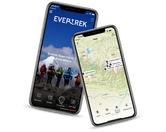
Trek Planning Tools
Get access to our mobile app with maps & countdown.

EverTrekker Medal
As a special thank you for completing your trek, a Yeti will arrange for you to receive an EverTrekker Medal. Perfect to show off to your friends!

EverTrek Goody Bag
Once you arrive in Nepal you'll receive a goody bag with a free duffel bag, cap, trip map, T-shirt, and a branded EverTrek buff. You'll really look the part!
Download the full Trip Guide
Find out all of the awesome details about the trip and download the full guide and walkthrough right here.
Download the full Trip Guide
Find out all of the awesome details about the trip and download the full guide and walkthrough right here.

Sustainable Tourism
Because we only use local guiding teams it ensures your trip directly benefits the local mountain communities.
Trip Highlights
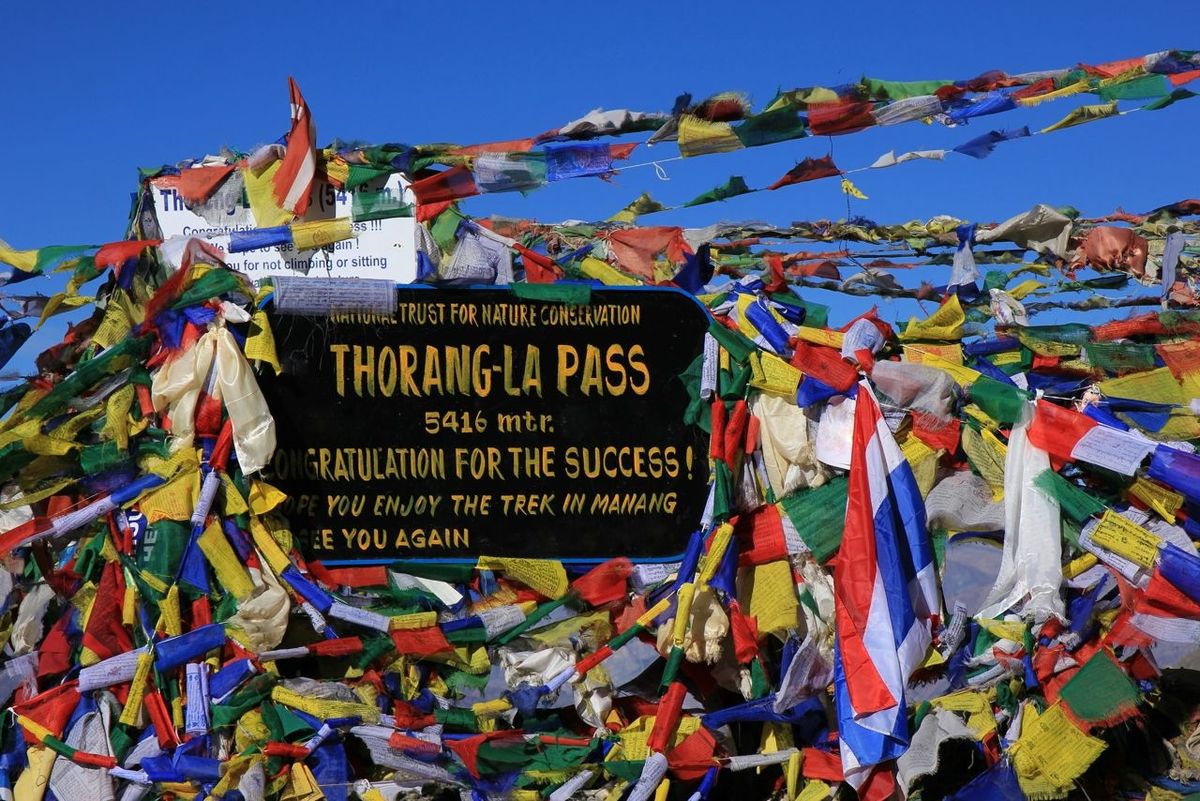
Cross the legendary Thorong La Pass (5,416m), one of the highest trekking passes on the planet.
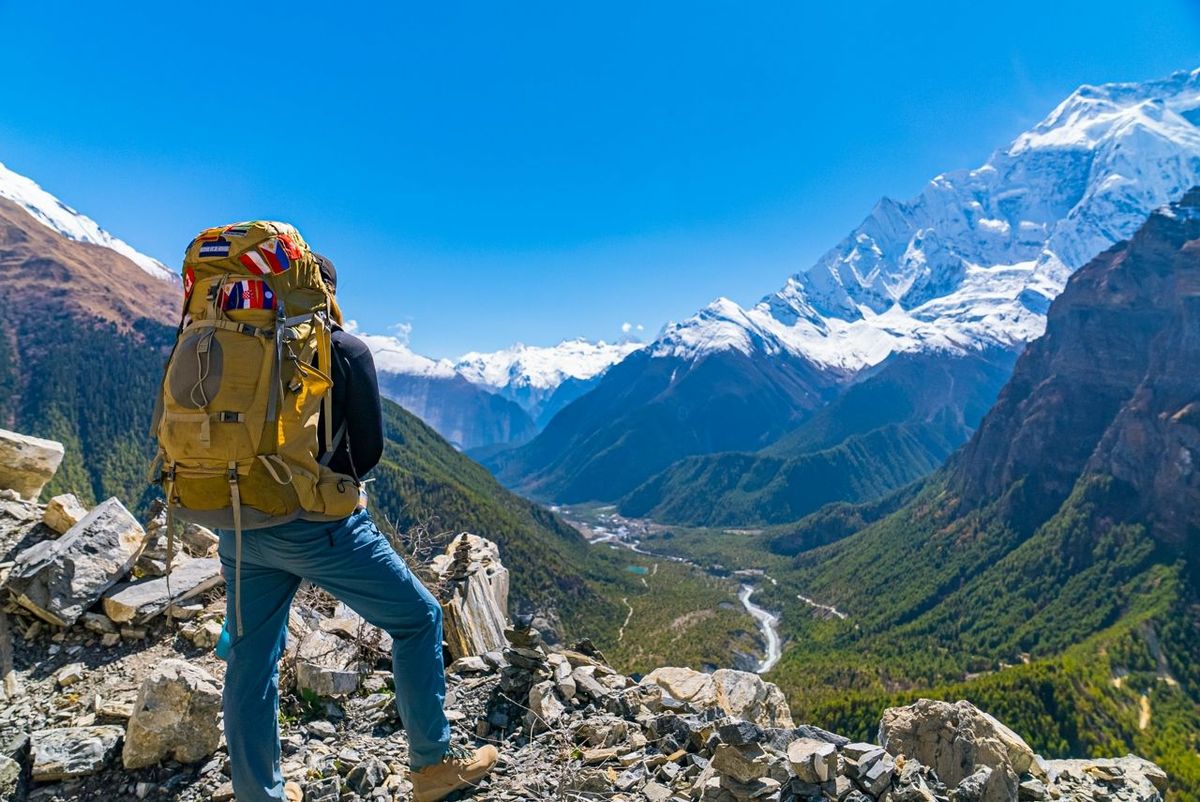
Trek through a constantly changing landscape - from lush jungle to barren high-altitude desert.
Stay in mountain villages with deep Buddhist culture and dramatic Himalayan backdrops.
Explore the sacred temple complex of Muktinath, a spiritual site for Hindus and Buddhists alike.
Feel the altitude shift under your boots as you follow ancient trade routes across the Annapurna range.
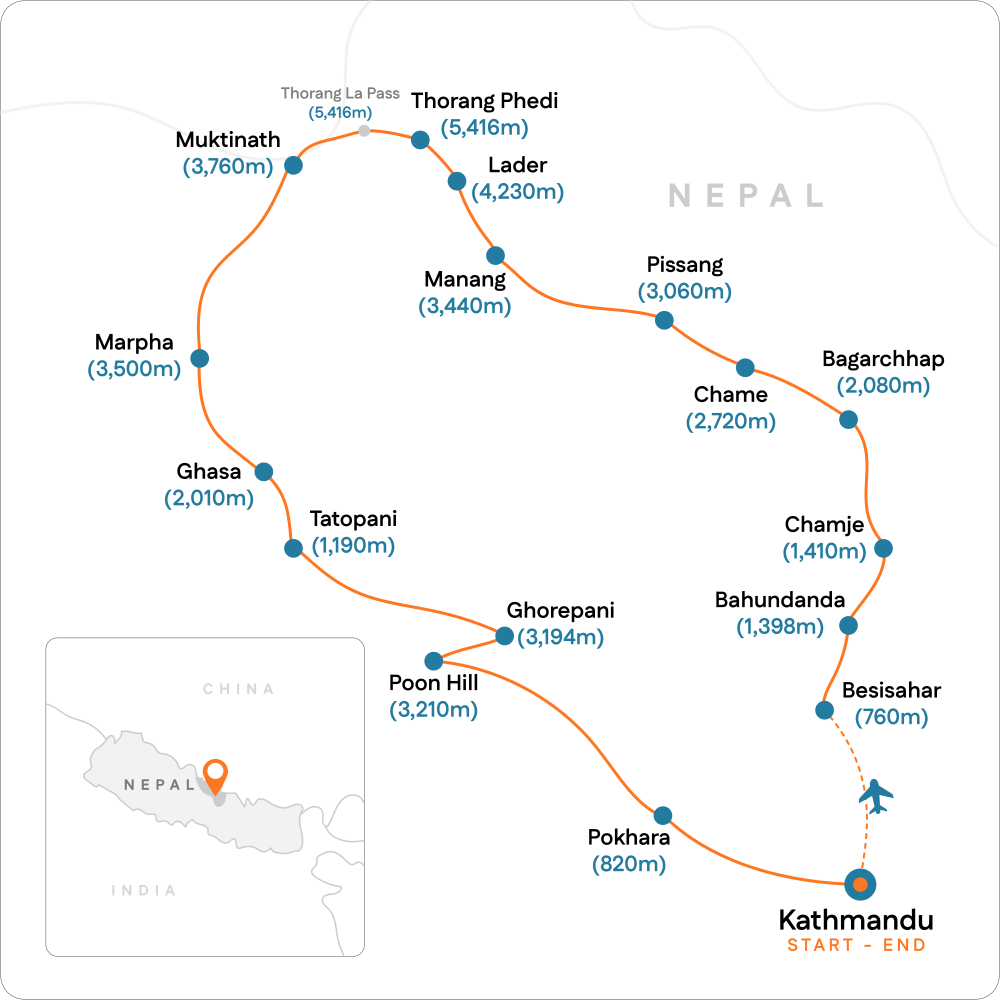
20-Day Annapurna Circuit Trek Itinerary
Welcome to Kathmandu! Your adventure with EverTrek begins the moment you arrive in the vibrant capital of Nepal.
After clearing passport control and collecting your luggage, head out to the front of Tribhuvan International Airport (TIA), where one of our friendly EverTrek team members will be waiting to greet you. Just look for the EverTrek sign. From there, you’ll be transferred to your hotel in the bustling heart of Thamel, Kathmandu’s lively tourist hub packed with colourful shops, cafés, and Himalayan charm.
As EverTrekkers will be arriving at various times throughout the day, you’ll have a chance to unwind and recharge after your journey.
In the evening, we’ll head out together for a welcome group dinner at one of Kathmandu’s most popular traditional restaurants. Tuck into delicious Nepali cuisine while enjoying live cultural music and a vibrant ethnic dance performance, the perfect start to your Himalayan experience.
Today, you’ll head out to explore the rich cultural and historical treasures of the Kathmandu Valley, a truly unforgettable introduction to Nepal’s vibrant heritage.
You’ll visit some of the city’s most iconic UNESCO World Heritage Sites, where ancient temples, bustling squares, and sacred shrines offer a fascinating glimpse into the region’s past. Along the way, we’ll stop for lunch at one of our favourite viewpoints, where you can relax and take in stunning panoramic views of the valley below. There will also be time to explore the trekking hub of Thamel, perfect for picking up any last-minute kit or essentials before the journey begins. After a full and inspiring day, we recommend an early night, tomorrow, the real adventure begins!
This morning, our experienced guides will collect you from your hotel and transfer you to Besisahar, the gateway to the Annapurna Circuit.
Your journey begins by heading west out of the Kathmandu Valley, travelling along the scenic Prithvi Highway. You’ll pass through lush hillsides, terraced farmland, and traditional villages as we follow the Trishuli River towards Dumre. From there, the road turns north, winding into the hills until we reach Besisahar. This drive offers a great introduction to the changing landscapes of western Nepal and sets the stage for the next chapter of your adventure.
Your trek begins today as we head north from Besisahar.
Following a dusty road that winds through sub-tropical forest and vibrant rice terraces a stunning start to your journey into the Annapurna region.
We pause at Khudi and Bhulbhule, where you’ll be treated to the sight of a dramatic 60-metre waterfall and your first glimpses of the majestic peaks of Manaslu, Himchuli, and Nagdi Chuli a thrilling teaser of the Himalayan giants ahead
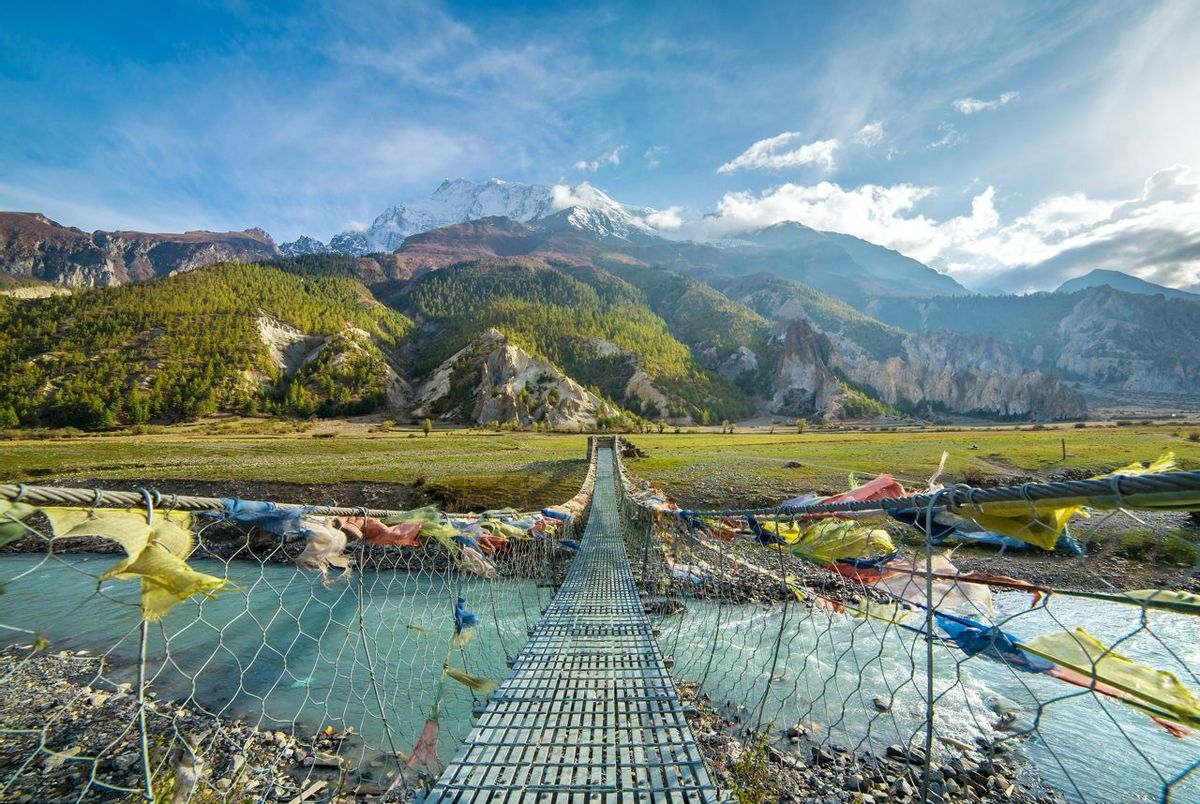
From here, we continue onwards to the peaceful town of Nagdi, where we cross a long suspension bridge over the Nagdi River. The final stretch of the day sees us climbing steadily to reach Bahundanda, a ridge-top village offering panoramic views of the surrounding hills and valleys. Tonight, we stay in a local lodge in Bahundanda, soaking in the quiet beauty of the countryside as the stars emerge over the hills.
We begin the day with a steep descent to the village of Syange at (1,070m)
Here you’ll be rewarded with one of the most spectacular views of a powerful waterfall cascading into the valley below a perfect photo opportunity. From Syange, the trail becomes more demanding, as we cross a dramatic suspension bridge over the Marsyangdi River and begin following the rugged riverside path.
This stretch of the trek offers dramatic scenery, with sheer cliffs and the sound of rushing water always nearby. We pass through the charming village of Jagat, where the landscape begins to shift and the terrain becomes more mountainous. From here, a challenging uphill climb leads us to Chamje, a small, peaceful village perched above the river. Tonight, we rest at a lodge in Chamje, surrounded by forested hills and the sound of the river echoing through the gorge.
Today, we say farewell to the Lamjung District and officially enter the mystical Manang District.
Here the landscape and culture begin to shift, offering a stronger Tibetan influence and an even deeper connection to the Himalayas. Our journey begins by descending to the Marsyangdi River, crossing a suspension bridge, and following the scenic riverbank trail. We gradually ascend towards Tal Phedi, where a steep climb leads us to Tal the first village of the Manang region. Nestled beside a waterfall on a wide river plain, Tal is a beautiful, serene stop that marks a significant milestone on the trek. From here, the trail continues through a traditional Tibetan-style gateway, symbolising our entry into high-mountain culture. We pass through rolling paths, both uphill and down, eventually reaching Dharapani, one of the larger villages along the route.
Our final push takes us to Bagarchhap, a quaint village surrounded by pine forest, with stone-built houses and mountain views all around. Tonight, we rest at a lodge in Bagarchhap, soaking in the cool mountain air and the peaceful rhythm of life in Manang.
Today’s trek leads us deeper into the Manang region, with Chame, the district headquarters, as our destination.
We begin with a climb up to Danaque, where we take the higher route, offering spectacular, uninterrupted views of the surrounding mountains a true reward for your efforts. From Danaque, the trail winds through the peaceful village of Tyanga, before continuing into a dense pine forest. The route becomes more rugged here, with multiple ascents and descents and several river crossings over suspension bridges adding a bit of adventure to the day’s journey. As we approach Chame, you’ll begin to notice the shift in architecture and atmosphere, with more pronounced Tibetan influence and snow-capped peaks drawing closer on the horizon.
Tonight, we rest in Chame, a lively yet remote mountain town, and prepare for the rising altitudes and stunning trails that lie ahead.
Today’s journey begins with a steep trail that climbs steadily into a beautiful and atmospheric forest of oak and maple a peaceful start to the day surrounded by nature.
As we continue, we cross two long suspension bridges, the river roaring below, before the trail bends and opens up to reveal dramatic views of the valley ahead. From here, we follow the path leading us into the heart of the Pisang Valley. We arrive in Pisang, a scenic village set against a backdrop of soaring peaks. After settling in, we take an acclimatisation hike to Upper Pisang, a traditional Tibetan-style village perched above the main trail. This short climb not only aids in your adjustment to the altitude but also rewards you with unrivalled panoramic views of Annapurna II and the surrounding mountains.
Tonight, we stay at a lodge in Pisang, soaking in the views and mountain silence.
Today, we enter the drier, high-altitude landscapes of the Manang District.
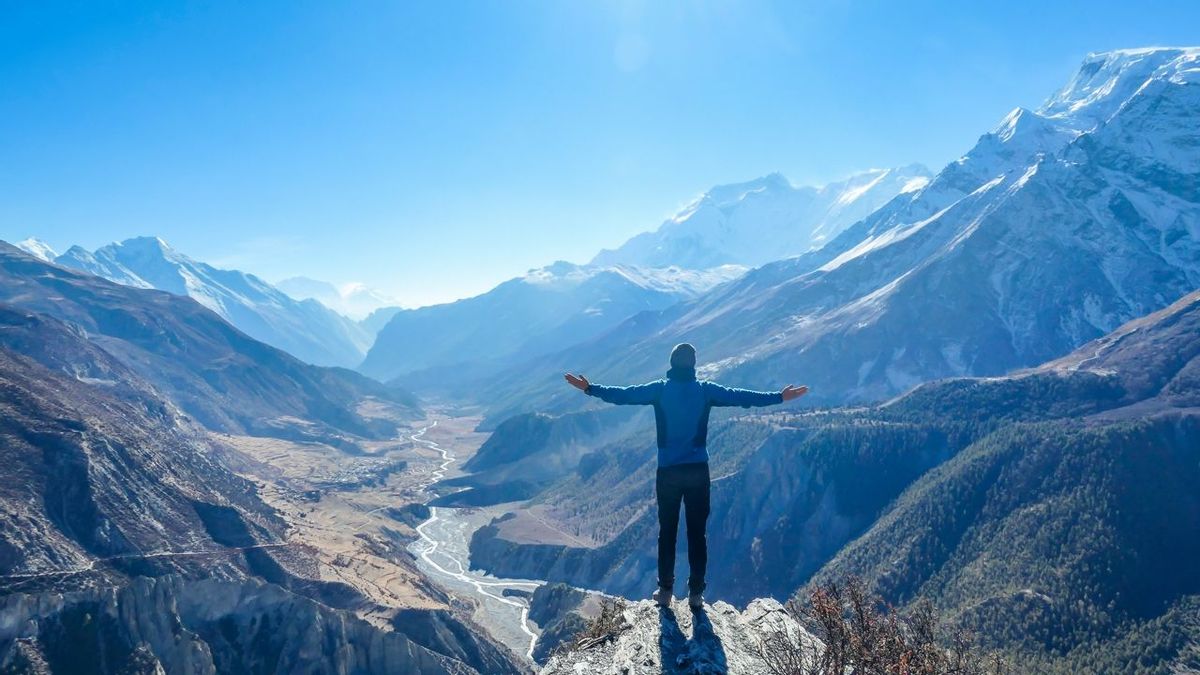
The trail offers two route options, the longer, steeper northern path via Ghyaru with spectacular mountain views, or the easier southern route via Hongde. Both trails meet at Mungi, from where we continue through Bryanga and on to the stunning village of Manang. Surrounded by towering peaks and glaciers, Manang is the perfect place to rest and acclimatise.
Today is a dedicated acclimatisation day in Manang, helping your body adjust to the increasing altitude.
Staying active is key, so we take a short hike either to the ridge near the Gangapurna Glacier or up to the cave above Manang village. The rest of the day can be spent exploring the village, taking in the stunning scenery and experiencing the unique local culture. This important rest day prepares us for the higher elevations to come.
Leaving Manang behind, we begin our gradual ascent towards Letdar.
The trail passes through Tenki Manang and follows the Jarsang Khola Valley, crossing alpine meadows and scrubby juniper slopes. We pass the small settlement of Ghunsa before reaching Yak Kharka, a high pasture used by local herders. From here, it’s another hour’s walk to Letdar, where we settle in for the night at a mountain lodge.
Today’s trek begins with a gentle descent to the river, where we cross a wooden bridge before climbing steadily to a small cluster of tea shops.
From here, the trail becomes more challenging as it winds along a cliffside path leading to Thorong Phedi, the base camp for tomorrow’s high pass crossing. For those wanting to ease the next day’s ascent, there’s also the option to continue up to High Camp. Tonight, we stay at a lodge in Thorong Phedi.
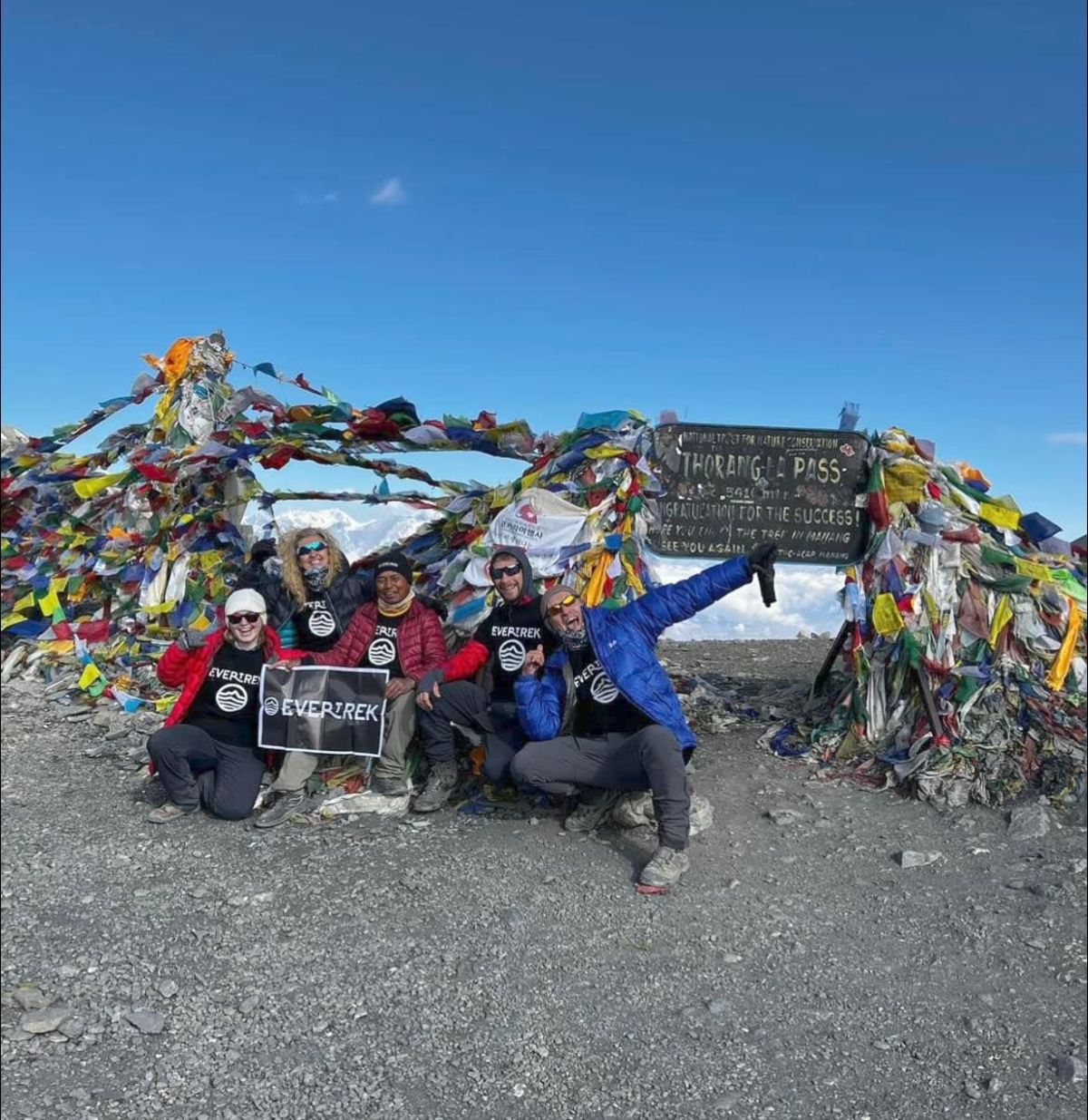
Today is the most challenging and rewarding day of the trek as we cross the Thorong La Pass (5,416m) the highest point on the entire Annapurna Circuit.
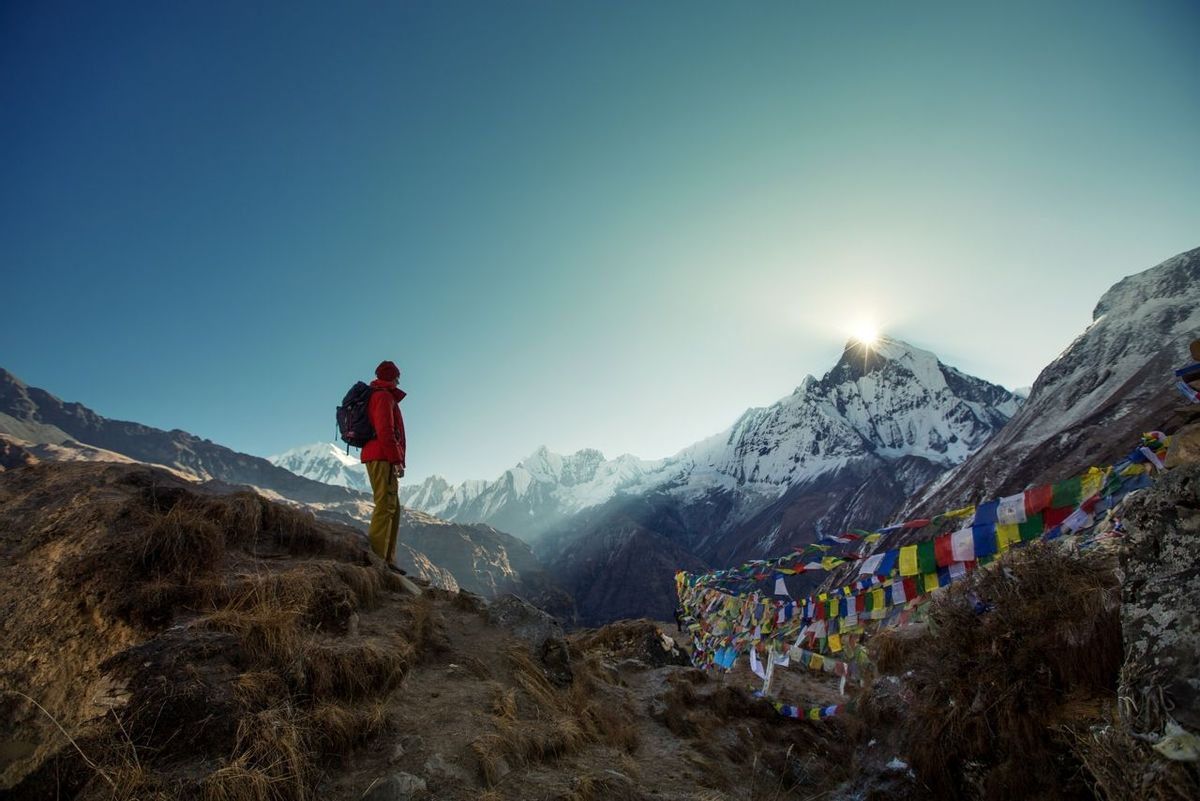
We set off early in the morning to avoid strong afternoon winds, aiming to reach the summit before 10am. The climb is steep and steady, taking around four hours of effort through high-altitude terrain. Reaching the top is an unforgettable moment, with prayer flags fluttering in the wind and panoramic views of the Himalayas stretching in every direction.
After soaking in the achievement and capturing some photos, we begin the long descent about four hours down to Muktinath, a sacred town in the Mustang District, revered by both Hindus and Buddhists. Tonight, we rest at a lodge in Muktinath, filled with pride and awe at what you’ve just accomplished.
Today, the trail begins to descend into the stunning Kali Gandaki Valley, following the banks of the sacred Kali Gandaki River.
The landscape grows more arid and dramatic as we head into the famously windy valley of Jomsom the administrative centre of the Mustang District. From Jomsom, we continue south along the river to reach Marpha, a charming village known for its whitewashed houses, narrow cobbled streets, and delicious apple products. Tonight, we stay at a lodge in Marpha, enjoying the peaceful atmosphere and unique culture of this hidden gem in the Himalayas.
Today we leave the towering peaks behind as we continue our descent through the Kali Gandaki Valley.
The trail is rough and dusty, winding alongside the river and offering a new perspective as the mountains slowly recede into the distance. Though we’re descending, the landscape remains breathtaking, with deep gorges, dramatic cliffs, and the ever-present river guiding our path. Tonight, we stay at a lodge in Ghasa, a quiet village nestled in the lower part of the valley.
Today’s descent from Ghasa to Tatopani is both scenic and exciting, with plenty of highlights along the way.
The trail heads steadily downhill, crossing a dramatic suspension bridge before leading us to one of the region’s largest waterfalls a powerful and beautiful sight. Further along, we pass through the world’s deepest gorge, carved between the towering peaks of Annapurna and Dhaulagiri. Our final destination is Tatopani, meaning “hot water” in Nepali and true to its name, here we’ll unwind in a natural hot spring, a perfect way to ease tired muscles after days on the trail. Tonight, we rest in a welcoming lodge in Tatopani, relaxed and rejuvenated.
Today’s trek is a long and challenging ascent from Tatopani to Ghorepani, but it’s also one of the most rewarding.
We begin by crossing the Kali Gandaki River, arriving at a trail junction one path leads to Beni, but we take the upper trail towards Ghorepani. From here, the climb becomes steeper, with stone steps winding their way upward through lush rhododendron forests. If you're trekking in spring, these trails come alive with vibrant blooms. As we ascend, you’ll be treated to stunning views of snow-capped peaks rising above 8,000 metres, and pass through traditional Gurung and Magar villages, offering insight into local mountain life.
Eventually, we reach Ghorepani, nestled in the hills and perfectly placed for tomorrow’s sunrise at Poon Hill. Tonight, we rest at a cosy lodge in this peaceful mountain village.
Today marks the final day of your trek, and it begins with a magical early morning hike to the famous Poon Hill viewpoint often called the ‘Photographer’s Paradise’.
We set off before dawn, hiking for about an hour uphill to reach the summit. As the first rays of sunlight illuminate the snowcapped peaks of the Annapurna and Dhaulagiri ranges, you’ll witness one of the most unforgettable sunrises in the Himalayas a perfect finale to your trekking adventure. After soaking in the views and taking plenty of photos, we return to Ghorepani for breakfast, then begin our descent towards Nayapul, where your Annapurna Circuit trek officially comes to an end.
From Nayapul, we take a tourist-standard bus back to Pokhara, where you’ll have time to relax, explore the lakeside, reflect on your incredible journey, or celebrate with your fellow trekkers. Tonight, you’ll stay in a comfortable hotel in Pokhara, resting up after completing one of the world’s greatest trekking routes.
Today, we leave the peaceful lakeside city of Pokhara and journey east back to Kathmandu.
The scenic drive along the Prithvi Highway takes around seven hours, offering one last look at Nepal’s rolling hills, rivers, and rural life. Upon arrival in Kathmandu, you’ll be transferred to your hotel, where you can freshen up and relax after the journey. In the evening, we’ll gather for a short debriefing session with our company representatives a chance to reflect on the adventure, share your experience, and provide any feedback.
After the meeting, enjoy a final dinner together with your fellow trekkers, celebrating the unforgettable journey you've completed. Tonight, you’ll stay in a comfortable hotel in Kathmandu, closing out your trek with well-earned rest and reflection.
Today marks the final day of your adventure in Nepal with EverTrek.
If your flight is scheduled for the early morning, one of our friendly team members will accompany you to the airport in good time for your departure. For those with later flights, you’ll have some free time to explore the bustling markets and streets of Kathmandu, perfect for picking up souvenirs and enjoying one last taste of Nepalese culture.
If you’ve booked extra nights in Kathmandu through us, you’ll continue to enjoy the comfort of your hotel until your departure day, with airport transfers included. For those extending their adventure with an add-on trip, such as the Chitwan National Park Safari, today is the day you’ll begin that journey, full details will be provided below.
Want to extend your adventure?
Once your trek is finished, why not relax and explore a rarely visited part of Nepal on our 3 Night tour of Chitwan national park.
Read more about this incredible extension - View the full itinerary here!
Departure Dates & Prices
Saturday 17th October 2026 –
Thursday 05th November 2026
£2,150pp
 Available


Can't see your preferred date?
Simply click the button below and we will see what we can do.
Enquire nowFood & Accommodation on Your Annapurna Circuit Trek
Trekking around the Annapurna Circuit is a massive adventure, but it is not all about switchbacks and summit passes. A big part of the journey is where you lay your weary head each night and what delicious, hearty meals you will be eating to fuel your trekking days. Here’s the lowdown on food and accommodation for your trek.
Your Accommodation Overview
- 5* hotel before & after
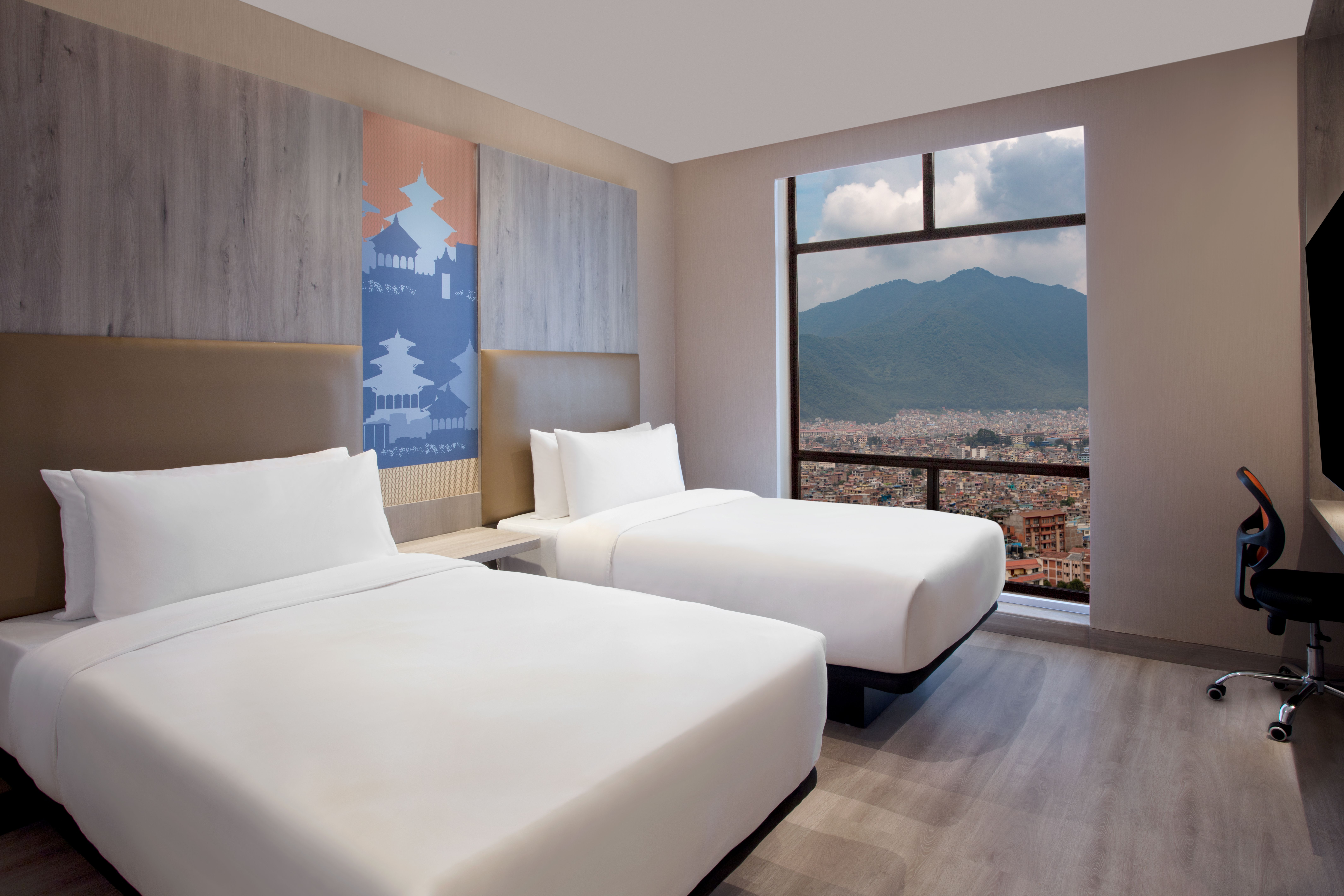
- Twin-share, En-Suite
- 3 meals on trek
- Treated water (not available in certain areas)
Accommodation on Your Annapurna Circuit Trek
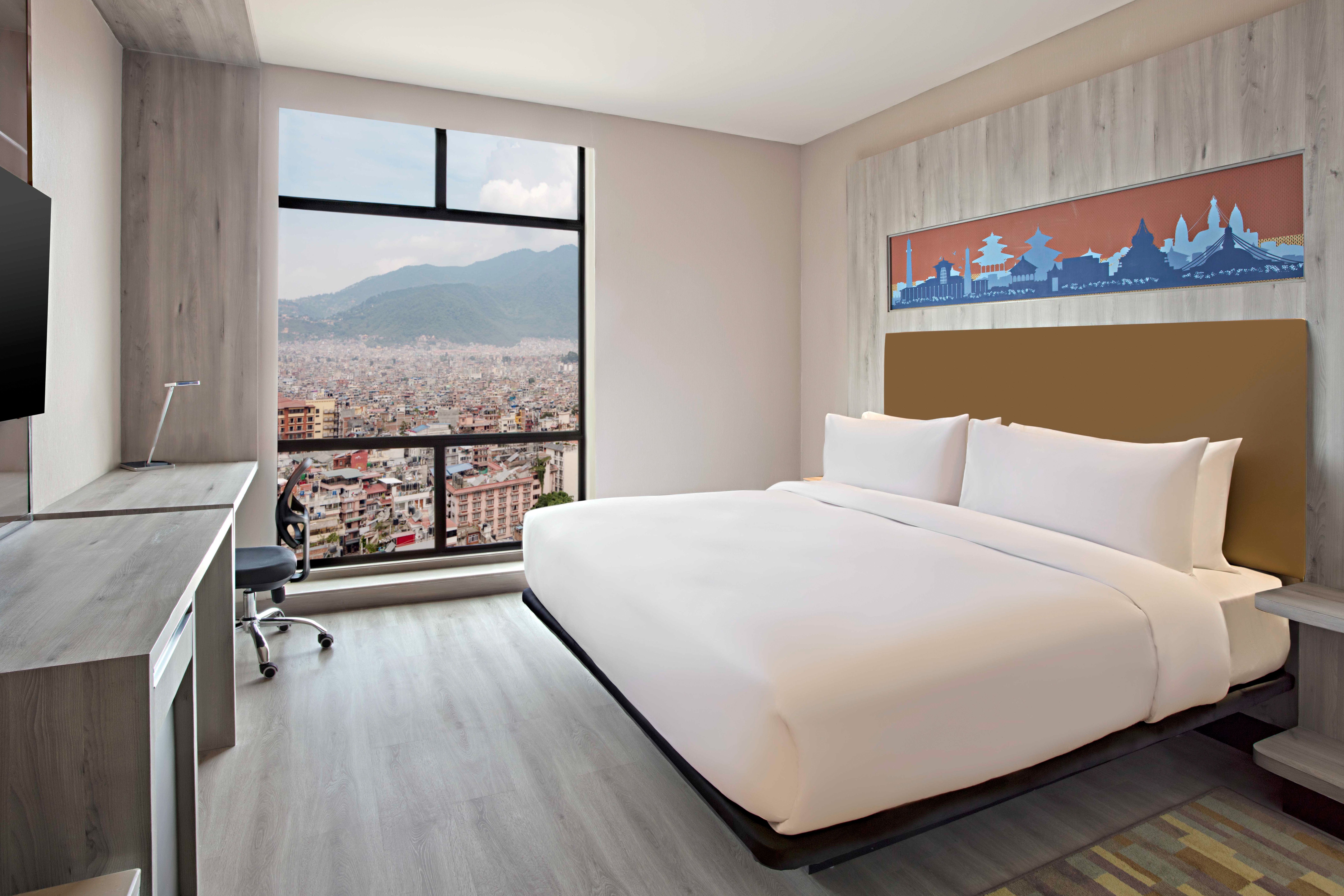
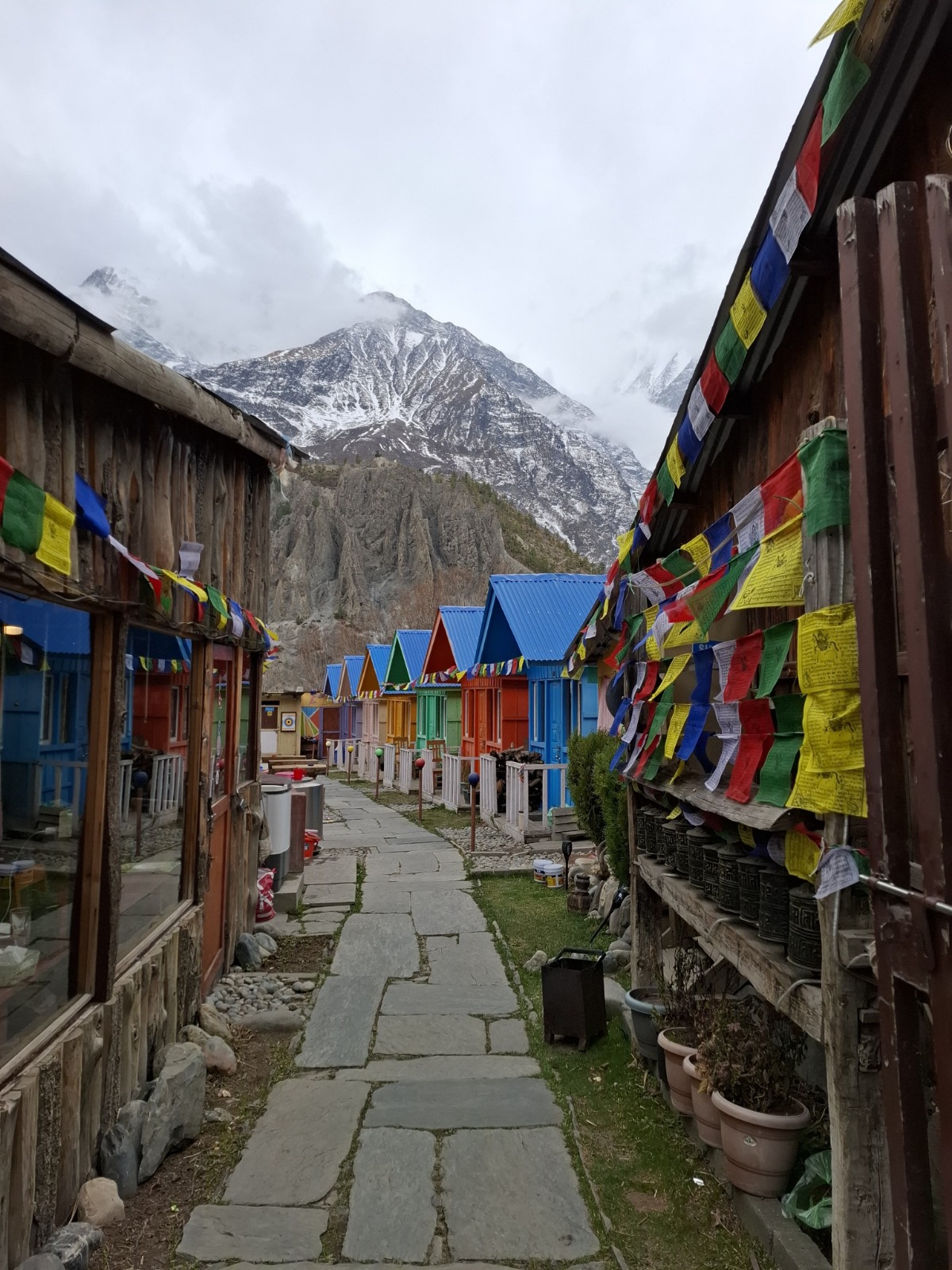
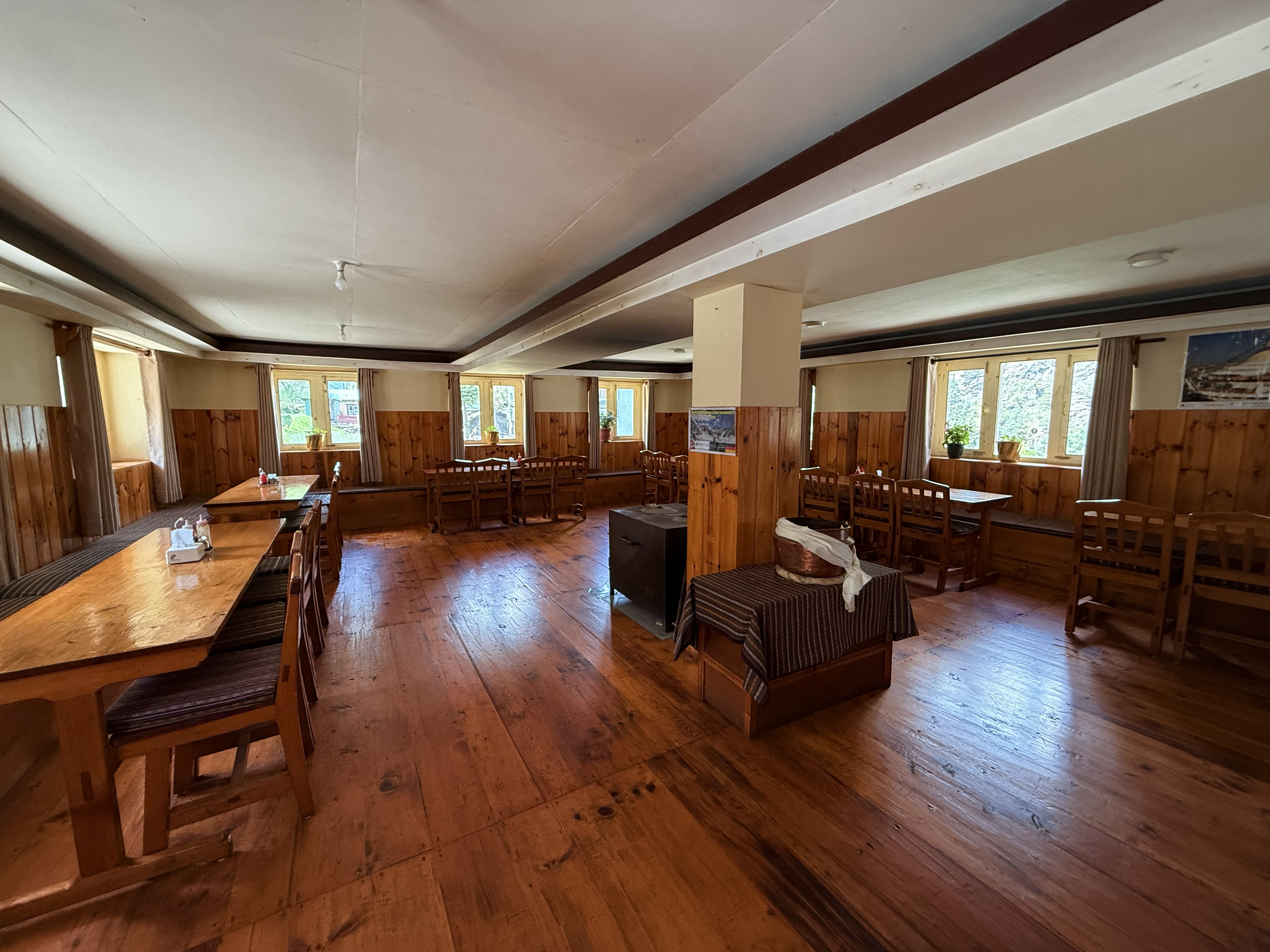
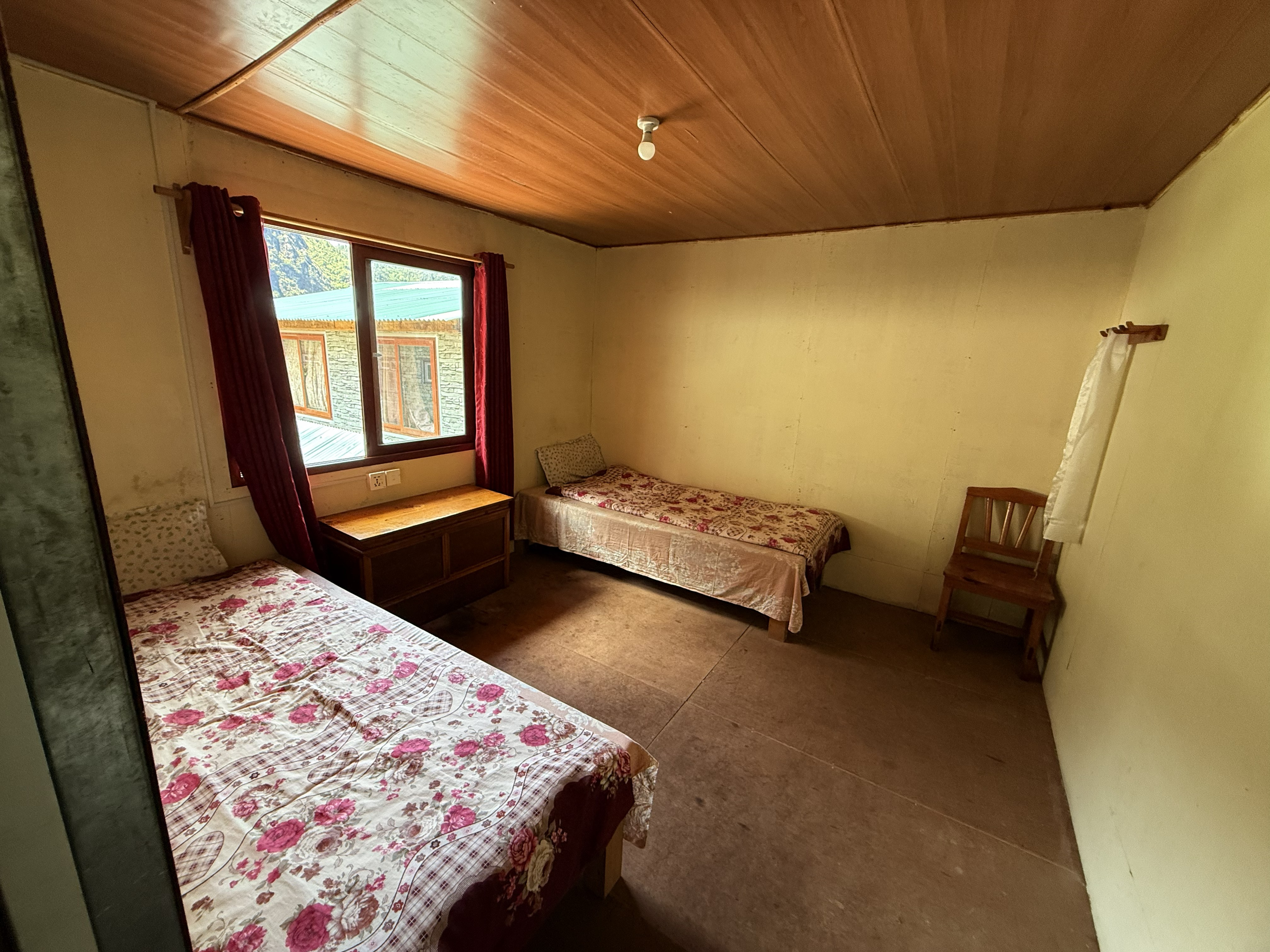
The accommodation on the Annapurna Circuit trek route is basic but it's all part of the adventure! You'll be pleased to know that both before and after your trek, you'll unwind in 5-star accommodation - giving you the perfect chance to relax and recharge in luxury.
| Nights | Location | Type | Room Type |
|---|---|---|---|
| 1-2 | Kathmandu | 5* Hotel Aloft | Twin-share, En-Suite |
| 3-17 | Annapurna Region Trekking Route | Teahouse/lodge | Twin-share |
| 18 | Pokhara | 3* Hotel | Twin-share, En-Suite |
| 19 | Kathmandu | 5* Hotel Aloft | Twin-share, En-Suite |

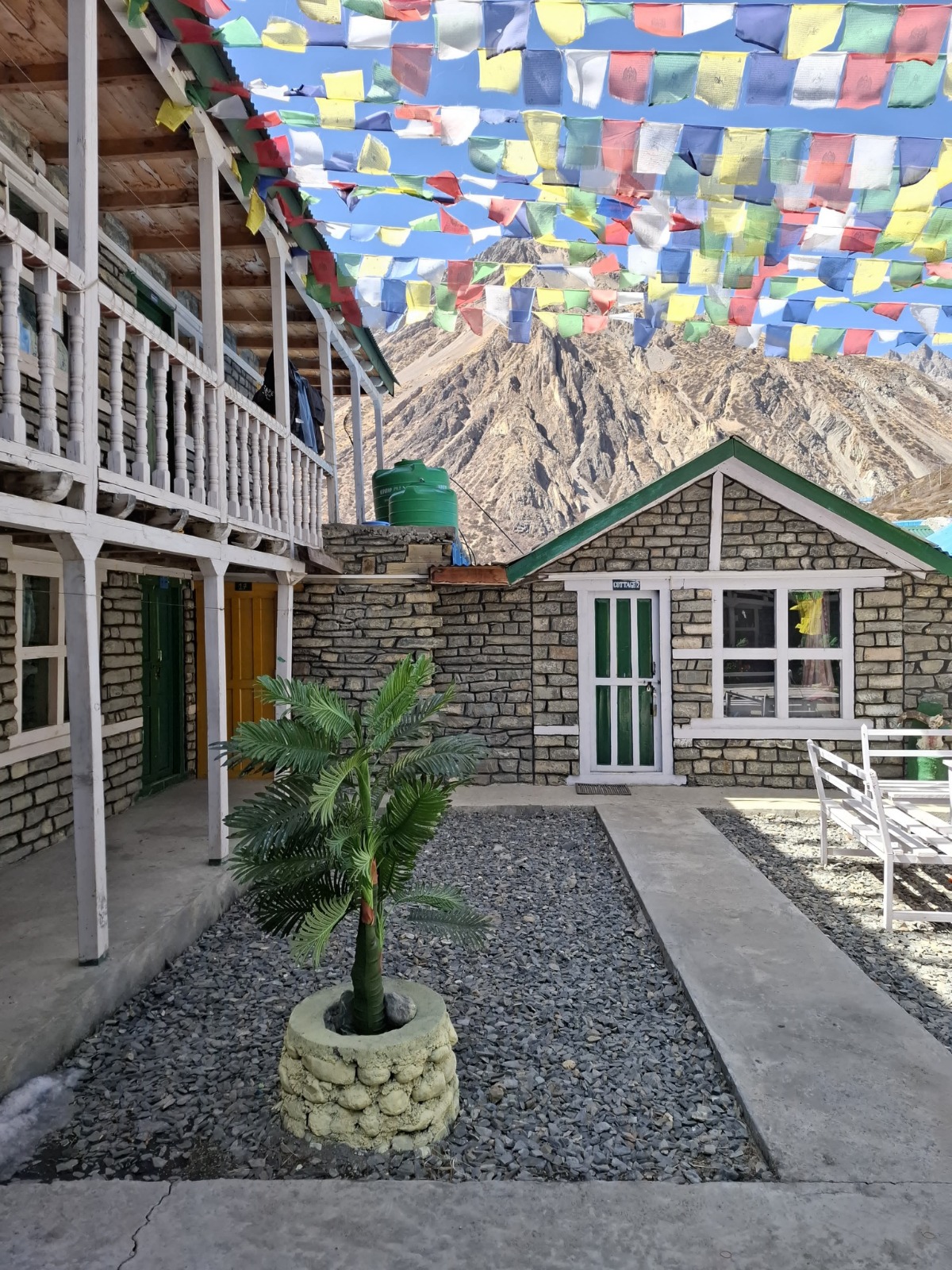
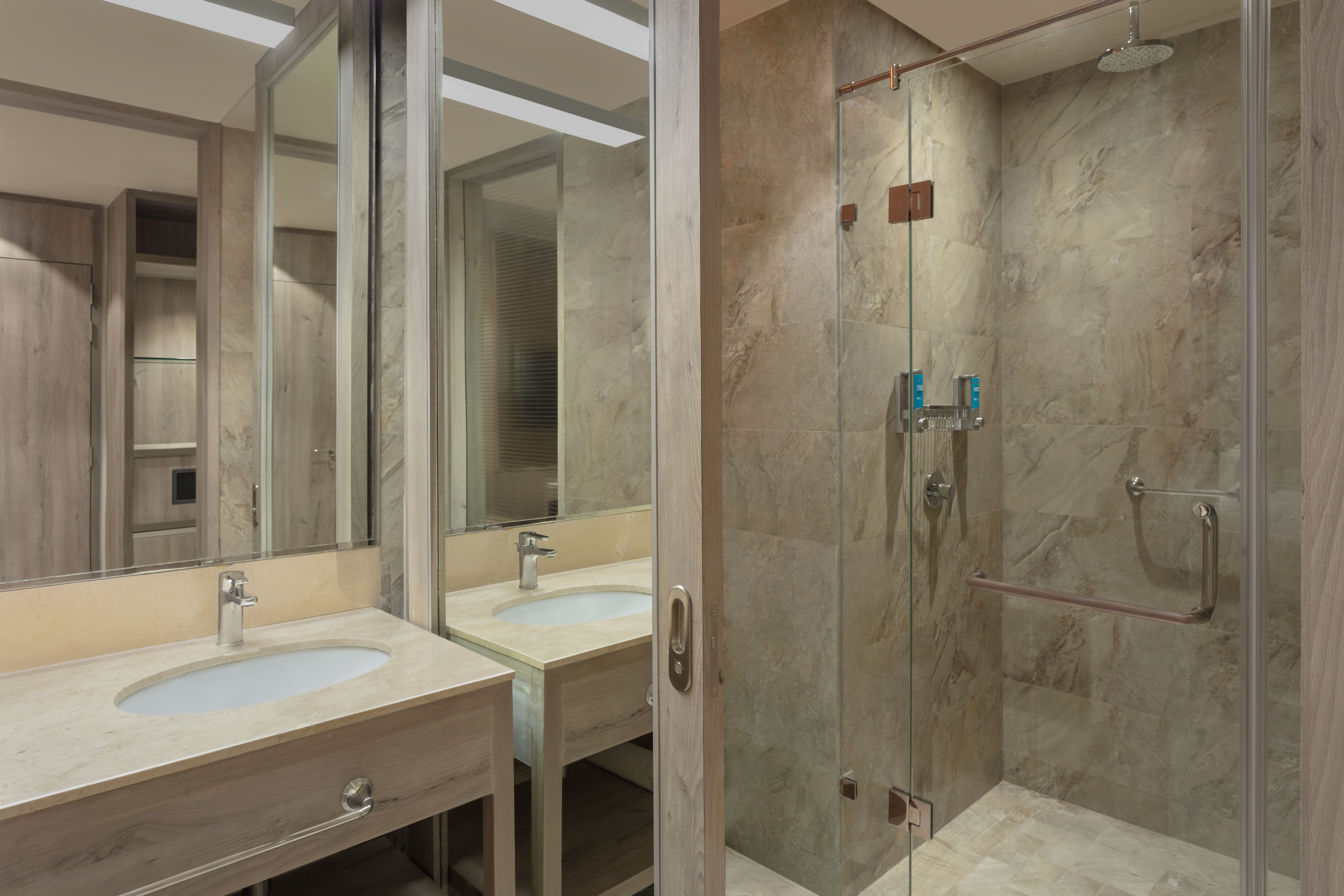
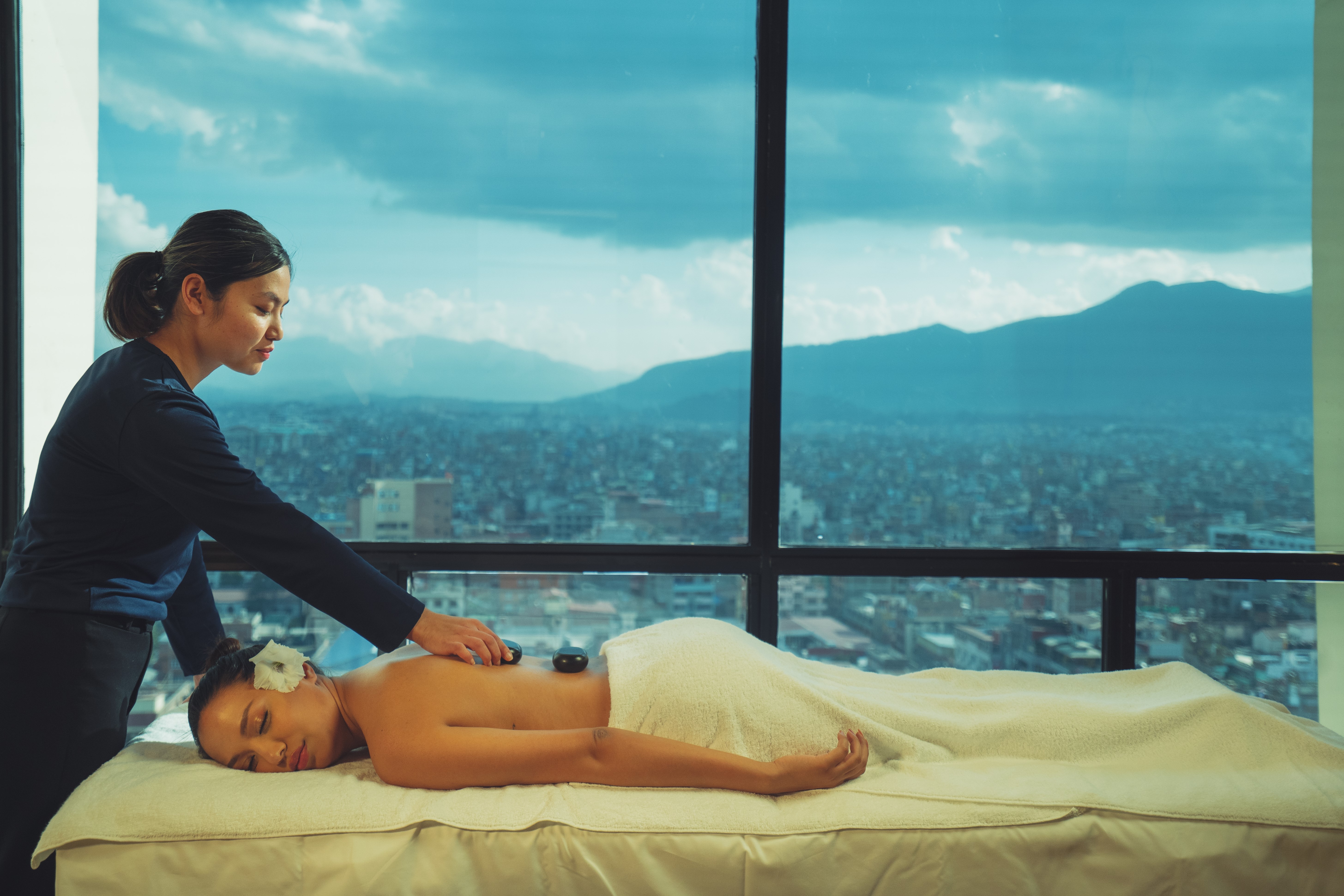
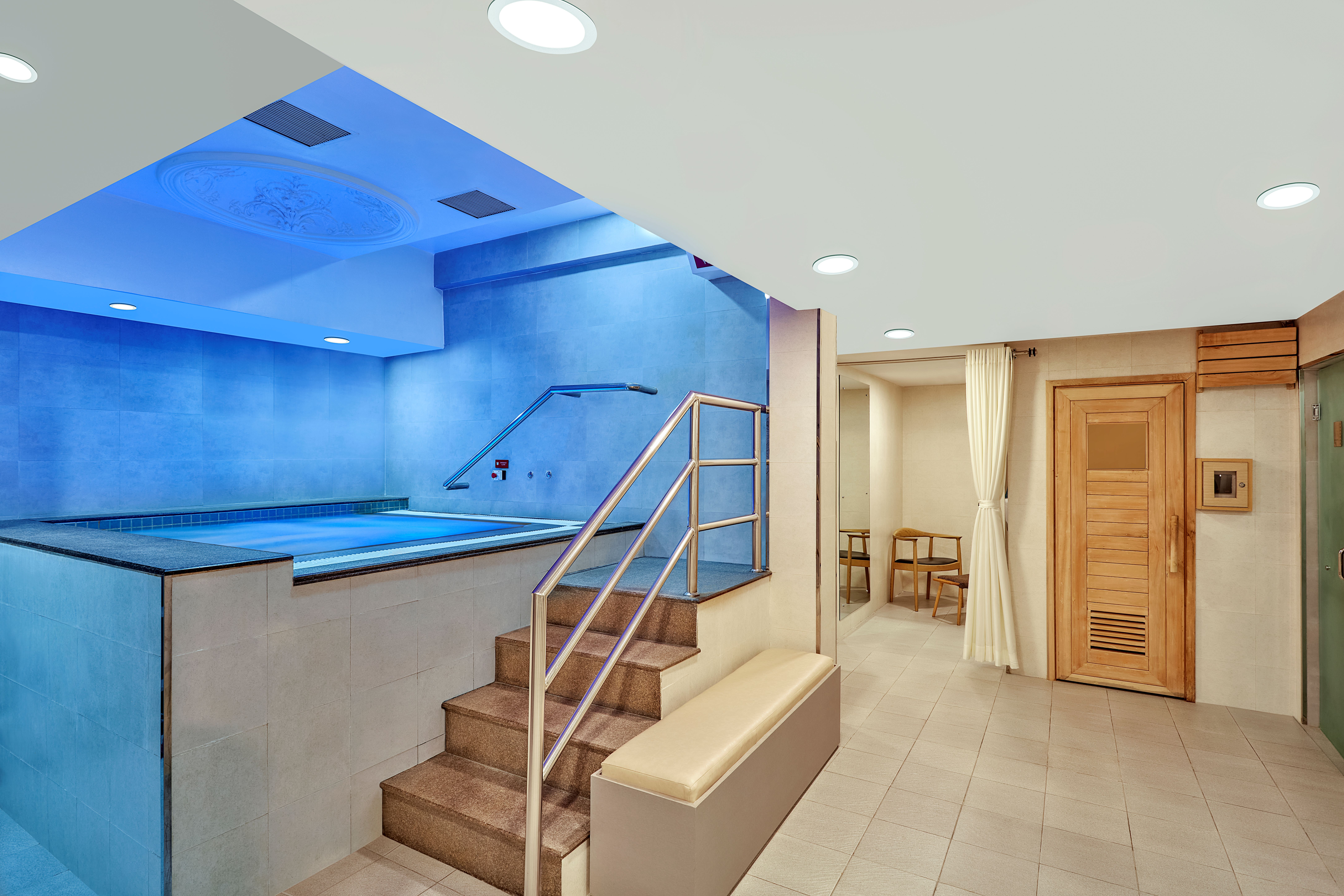
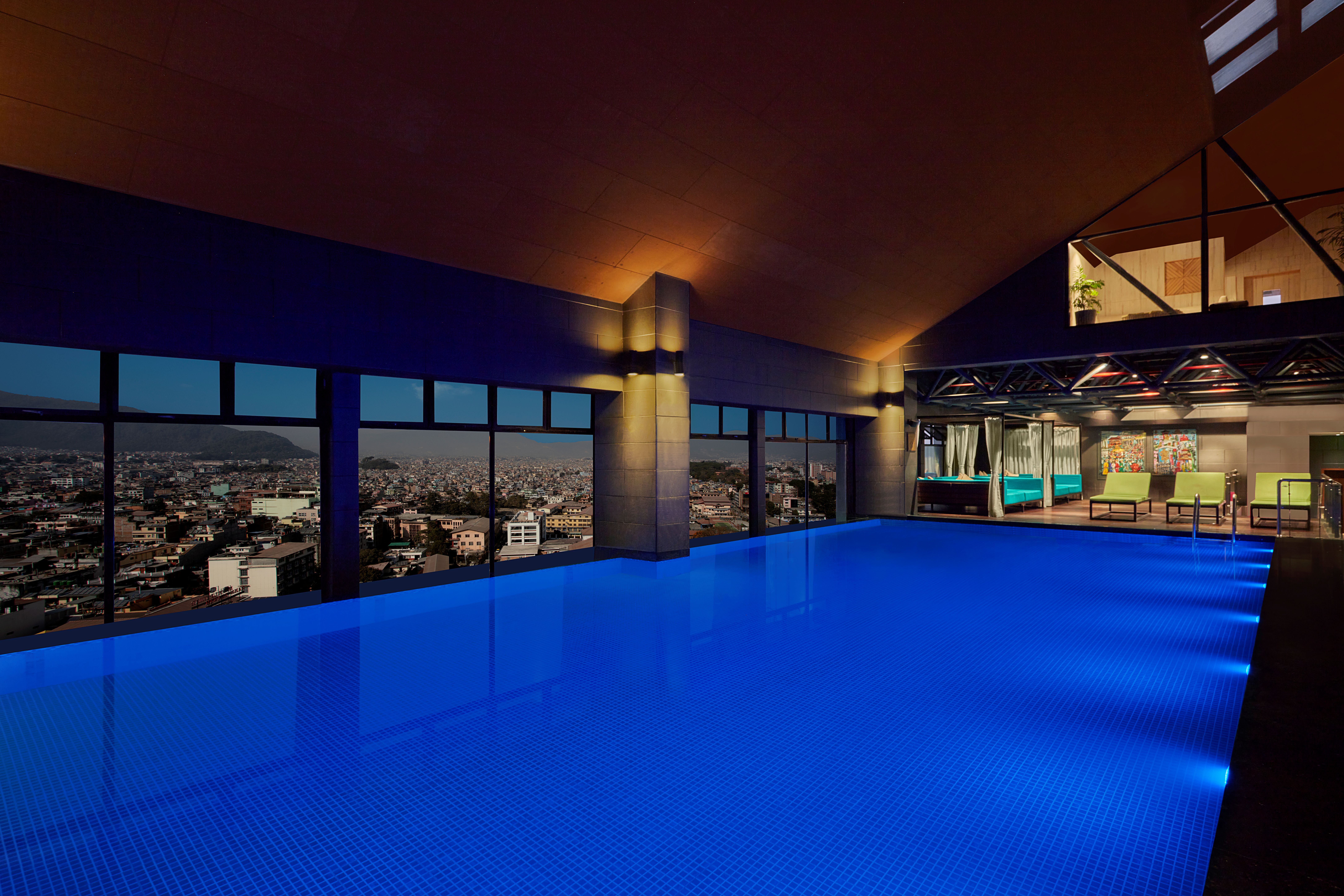
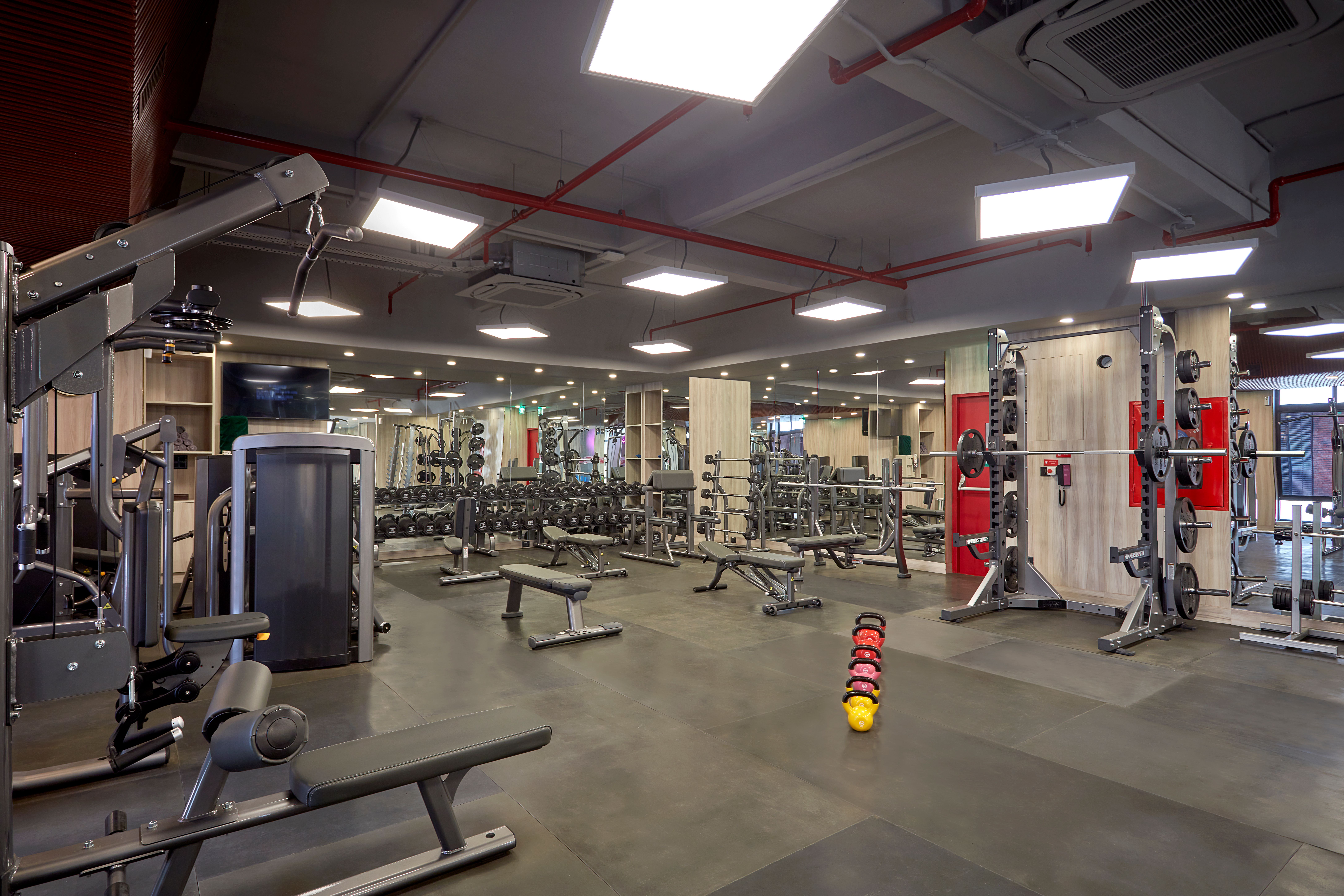
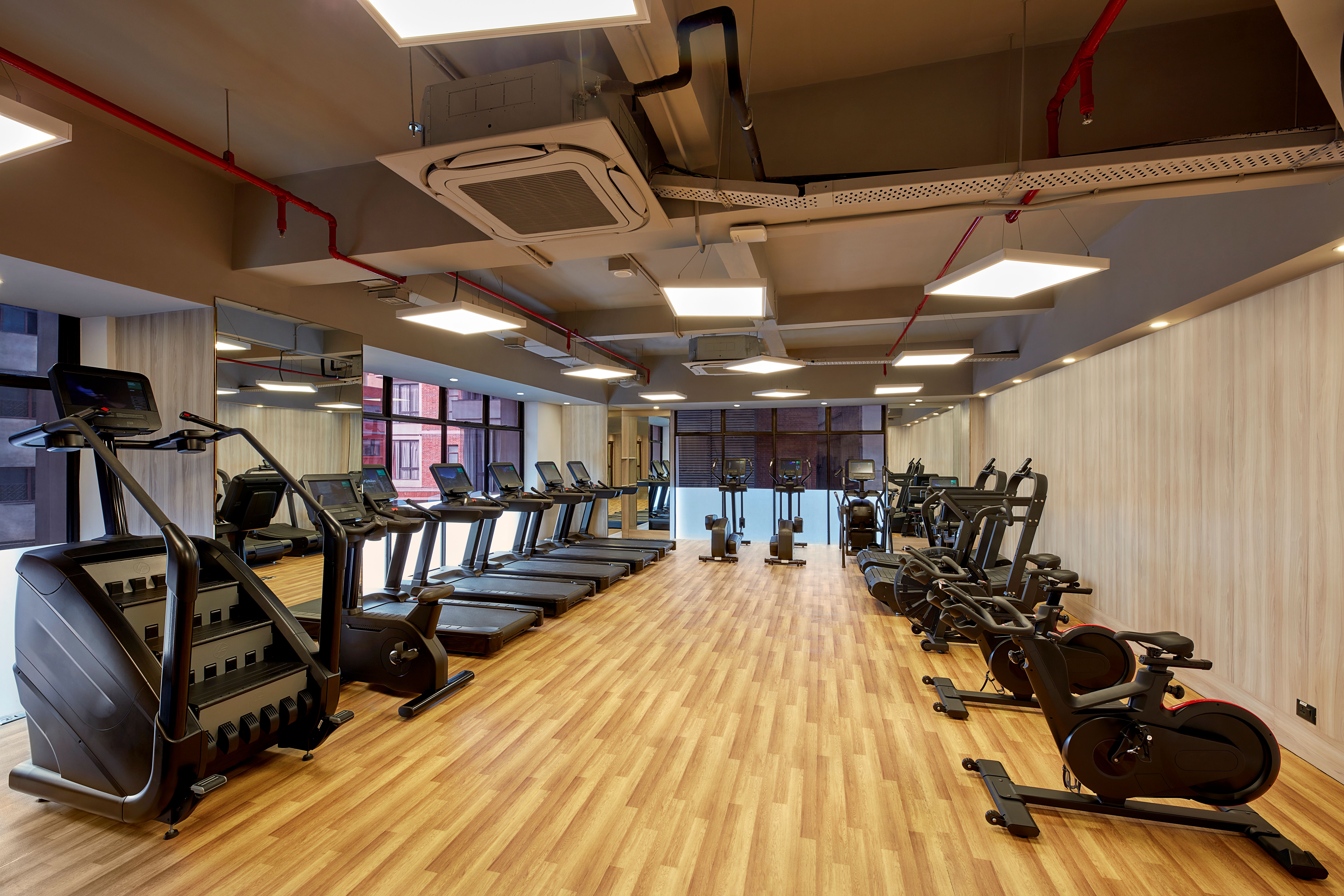
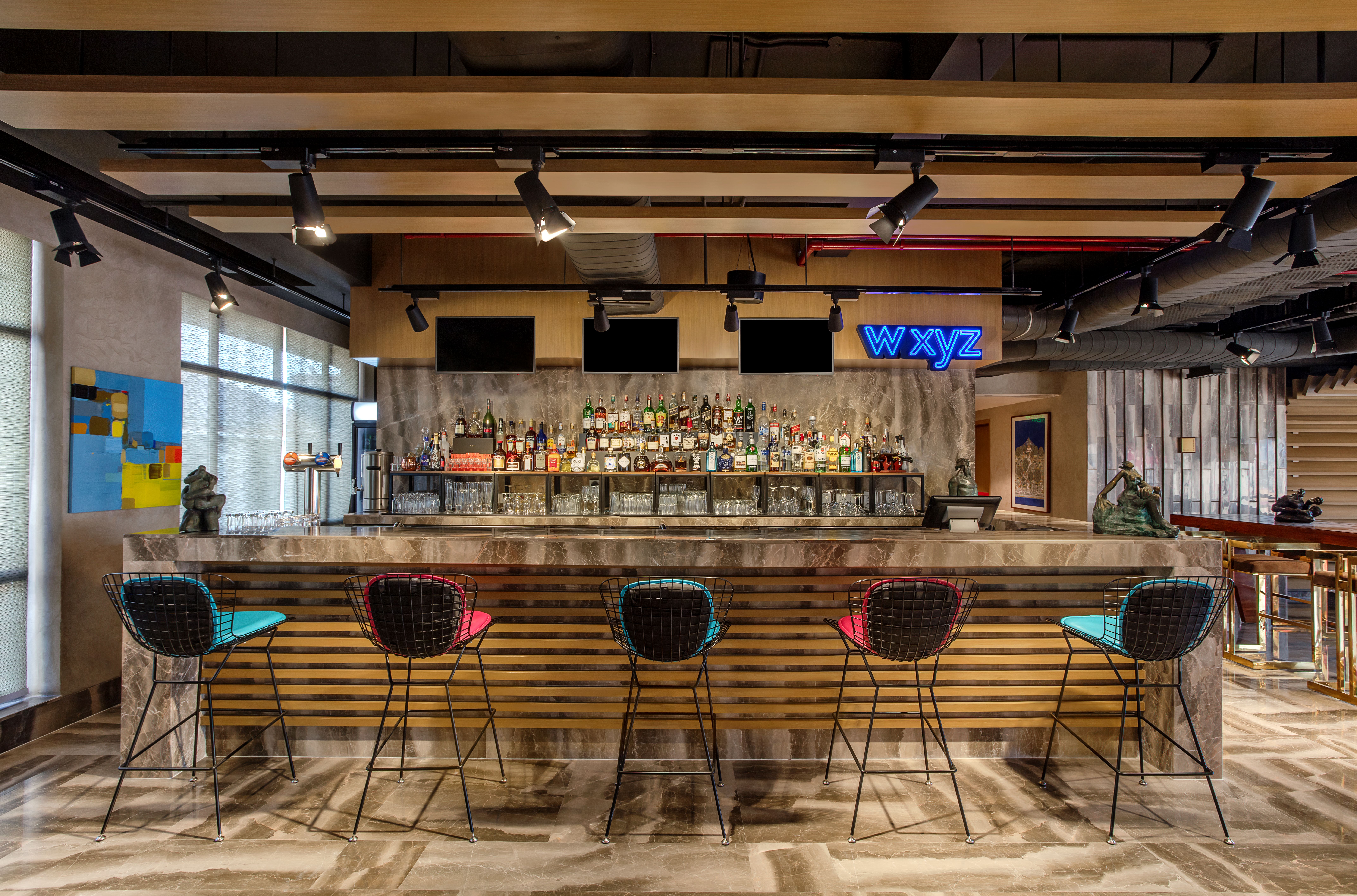
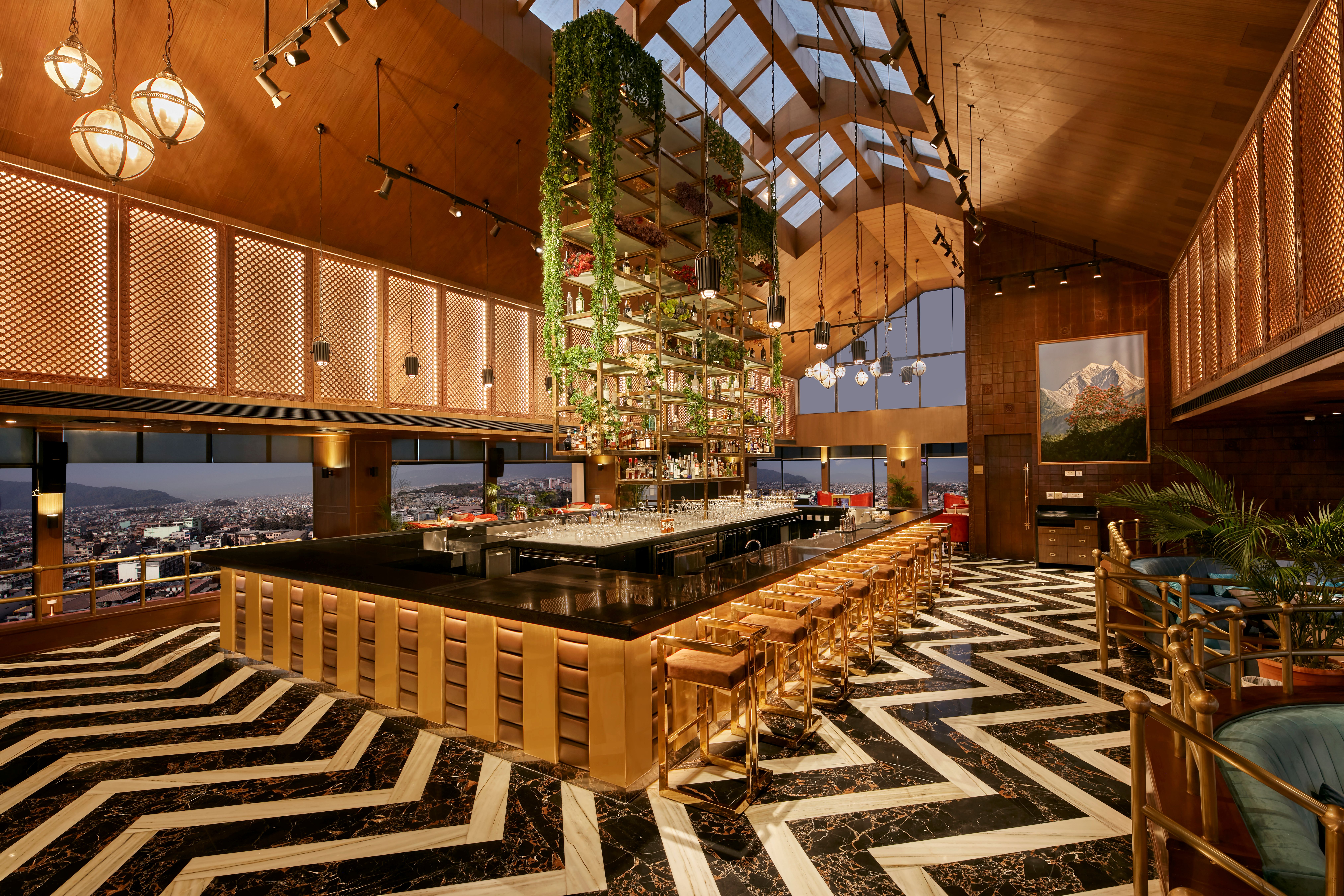
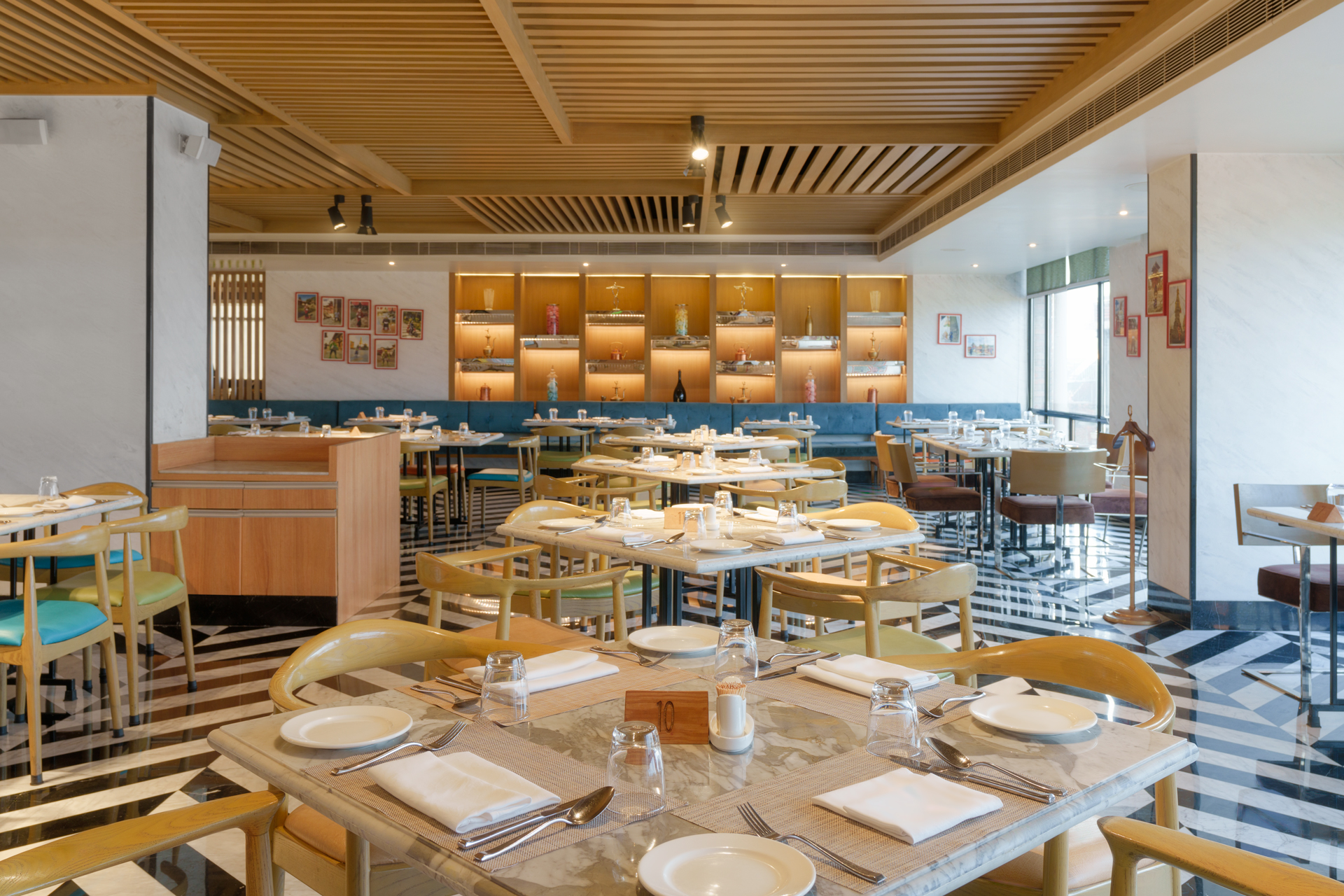
Hotel Aloft is a 5* hotel with restaurants, bars, and local restaurants nearby. There is also a swimming pool, gym, and on-site spa to relax in before your trek. All rooms are twin-share with an en-suite, unless a single room supplement is arranged ahead of time. Please contact the office to discuss this.
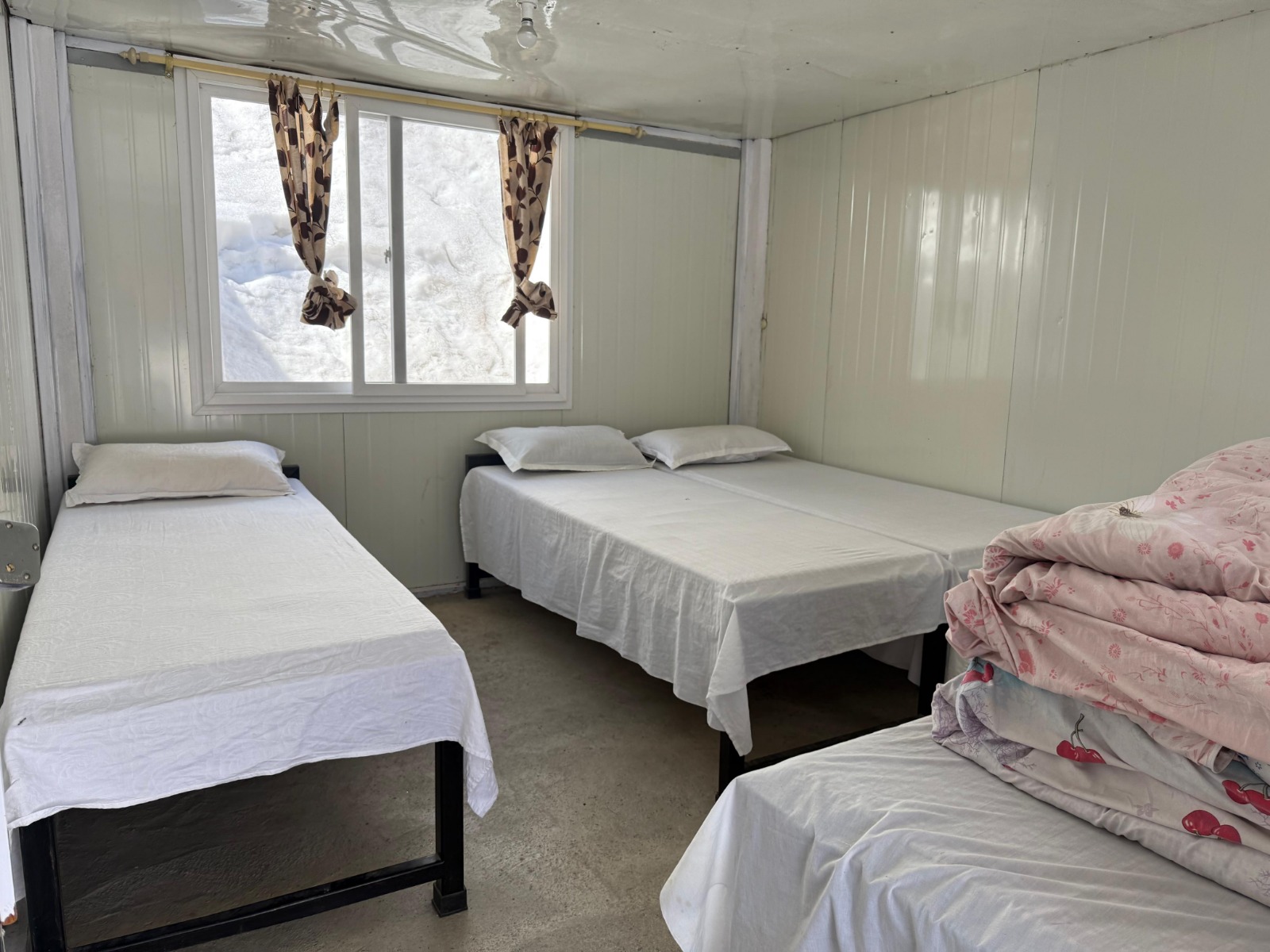
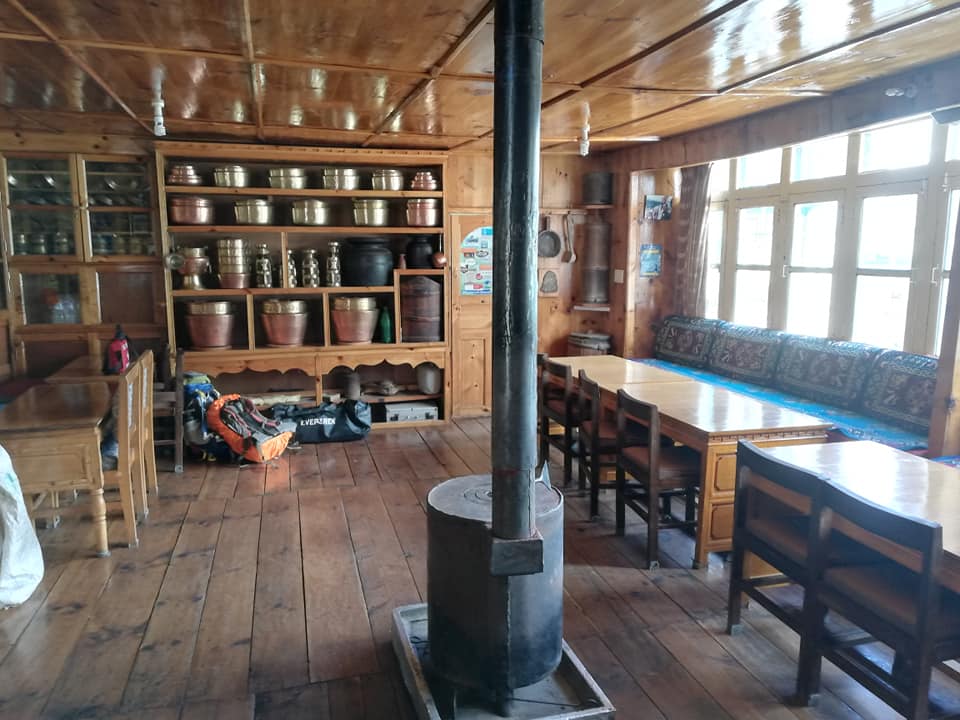
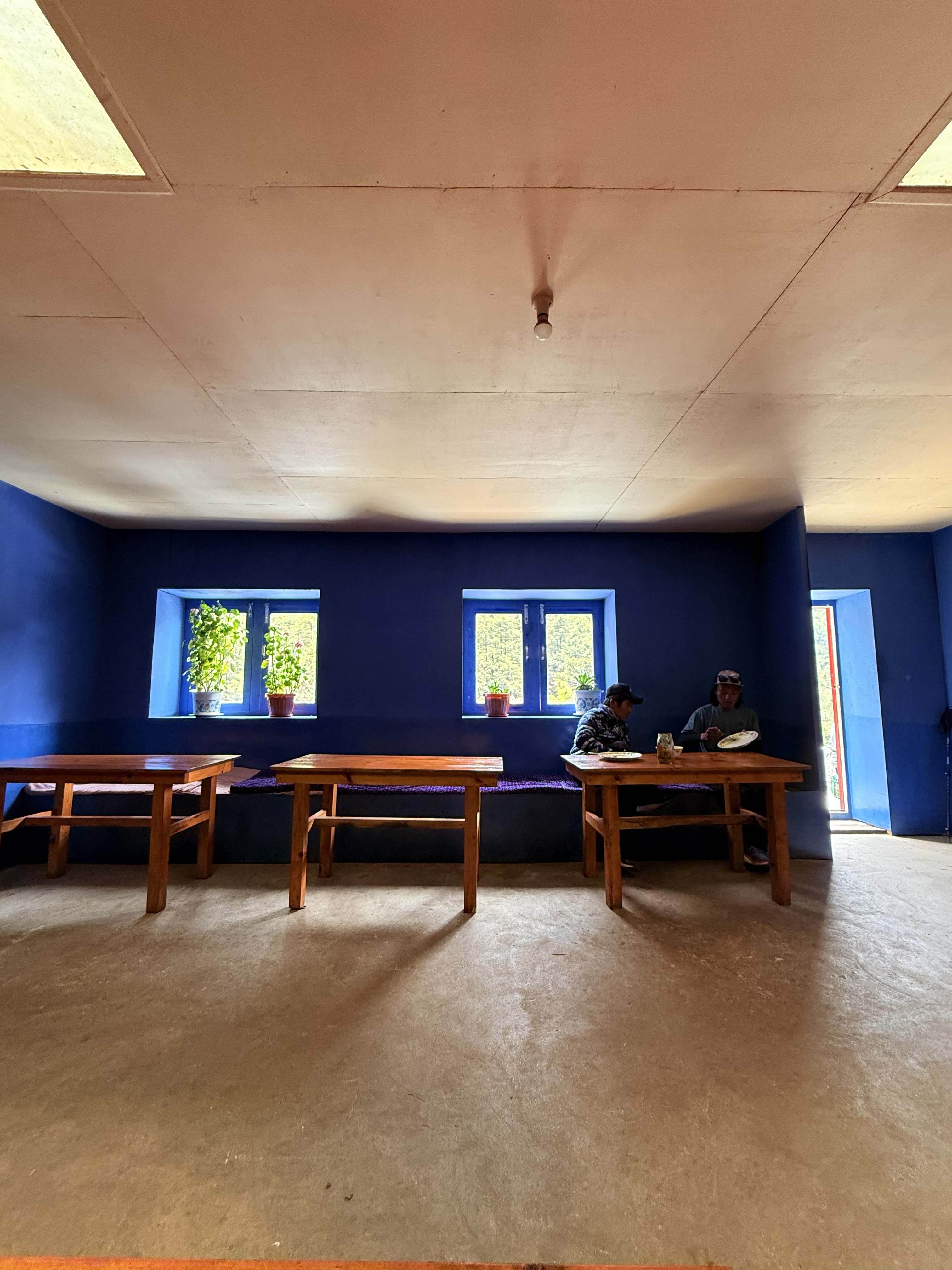
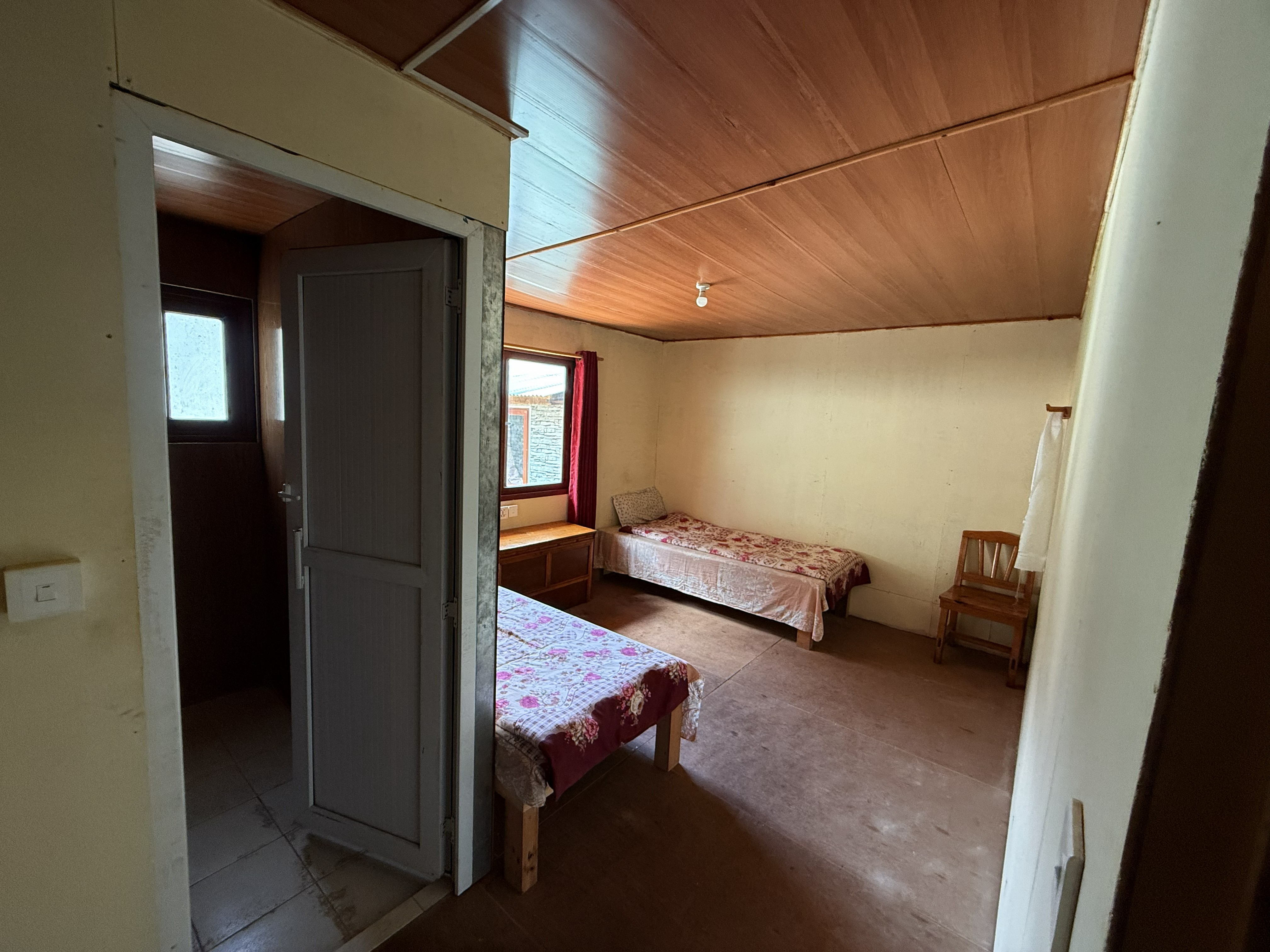
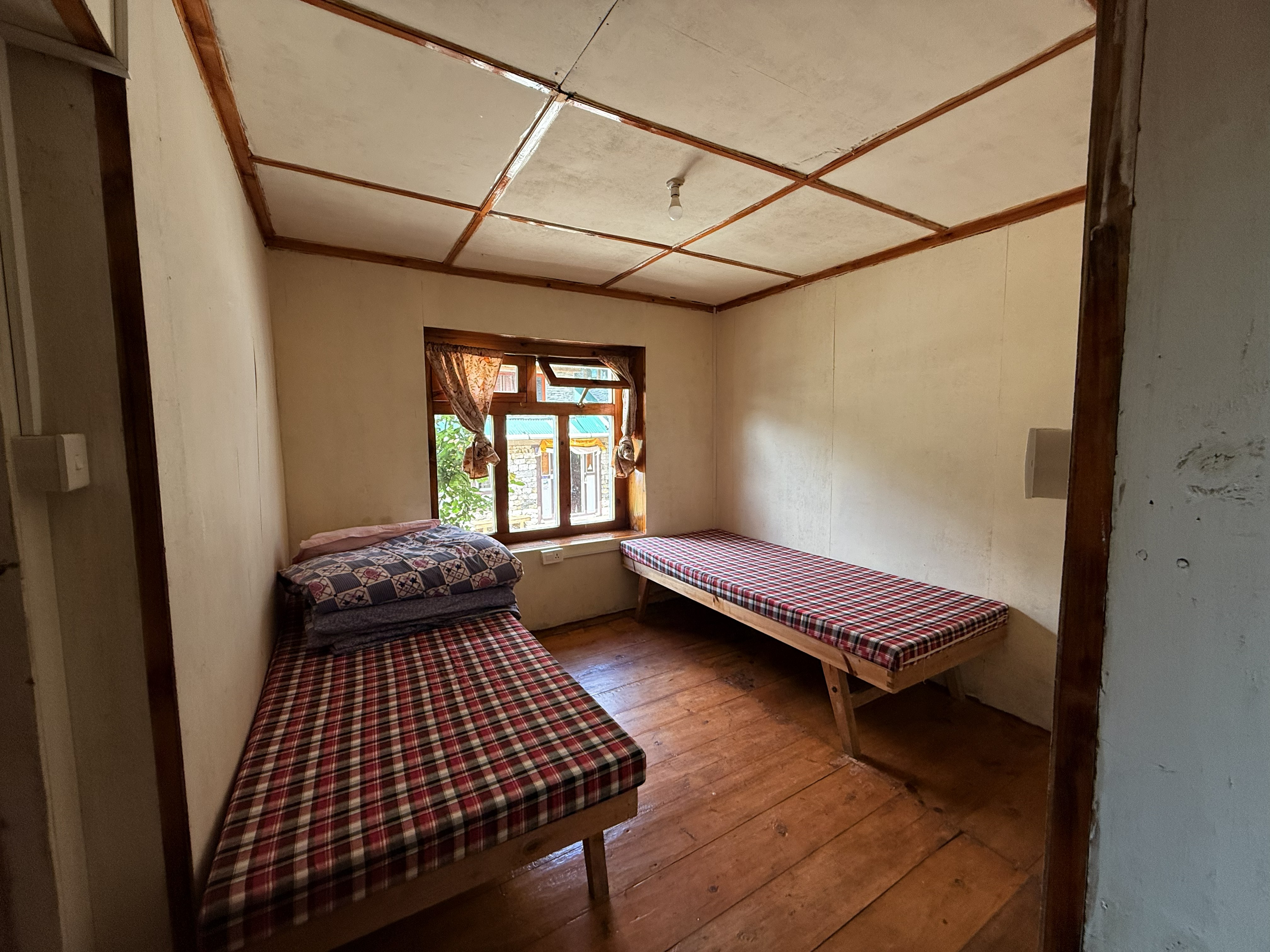
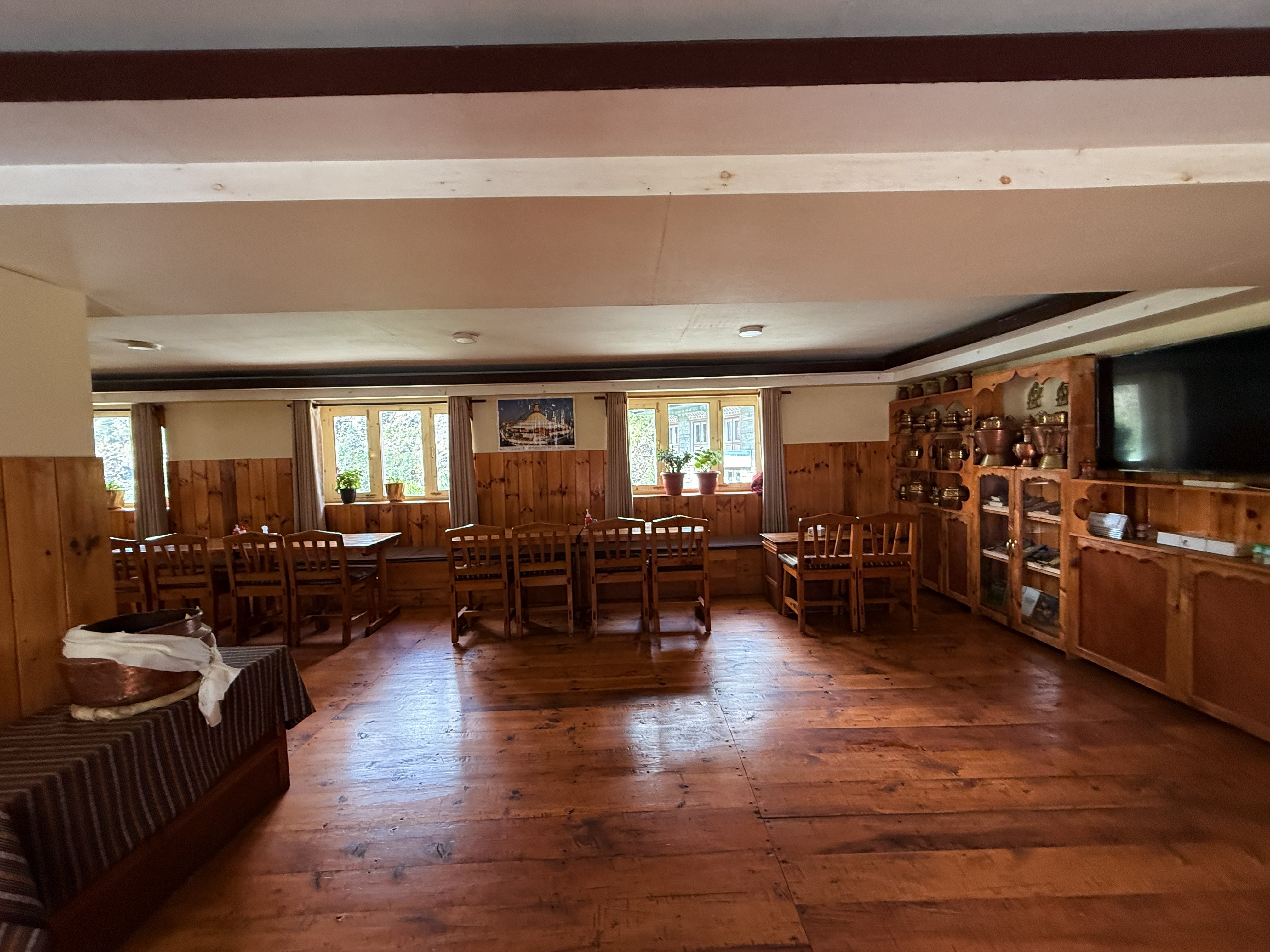
Tea houses and lodges are the most common accommodation types along the Annapurna Circuit route. They are simple, family-run establishments and provide a place to rest after a long day of trekking.
Rooms typically feature a mattress, pillow, and blanket. However, we recommend a sleeping bag for extra warmth. (You can rent these from us for free!)
The first night, right after the trek, you’ll stay in a comfortable hotel in Pokhara. Typically, this will be a 3-star Hotel Middle Path in Pokhara (or similar).
You can expect:
- Twin-share rooms with en-suite bathrooms
- WiFi access (a blessing after your mountain days)
- Hot showers and good comfy beds (trust us, you’ll appreciate these more than ever post-trek!).
While the tea houses are cozy, they are not 5-star hotels. The focus is on providing a safe and warm place to rest rather than luxury.
A good sleeping bag, earplugs, and a power bank can make your stay more comfortable.
The simplicity of the accommodation is part of the charm of trekking in such a remote and stunning region.
Food on Your Trek
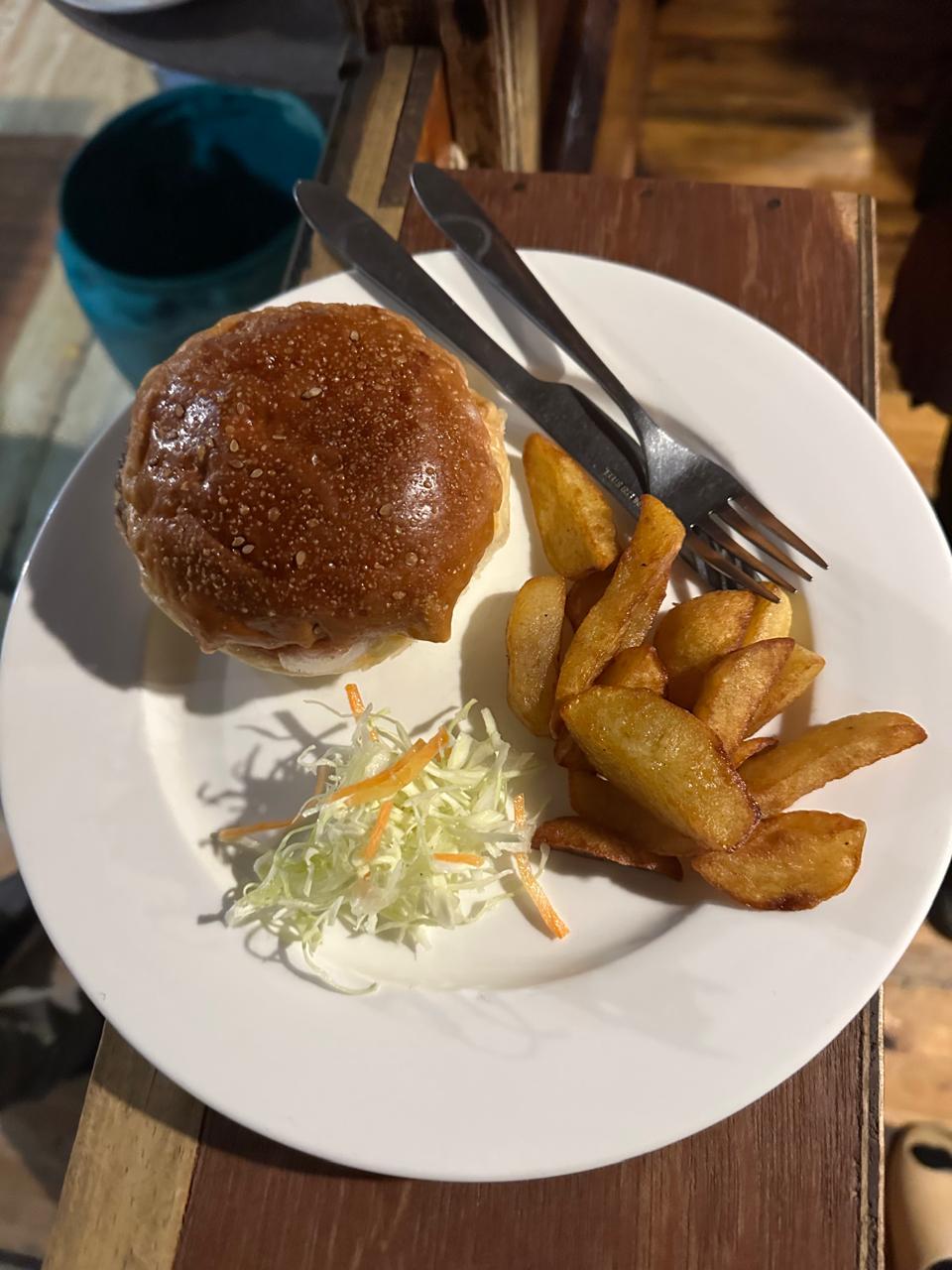
You will enjoy three hearty meals a day while you are trekking, as well as a group welcome and farewell dinner back in Kathmandu to celebrate the adventure!
| Days | Breakfast | Lunch | Dinner |
|---|---|---|---|
| 1: Kathmandu (Arrival Day) | |||
| 2: Kathmandu | |||
| 3: Kathmandu/Besisahar | |||
| 4-18: Trekking Route | |||
| 19: Pokhara/Kathmandu | |||
| 20: Kathmandu (Departure Day) |

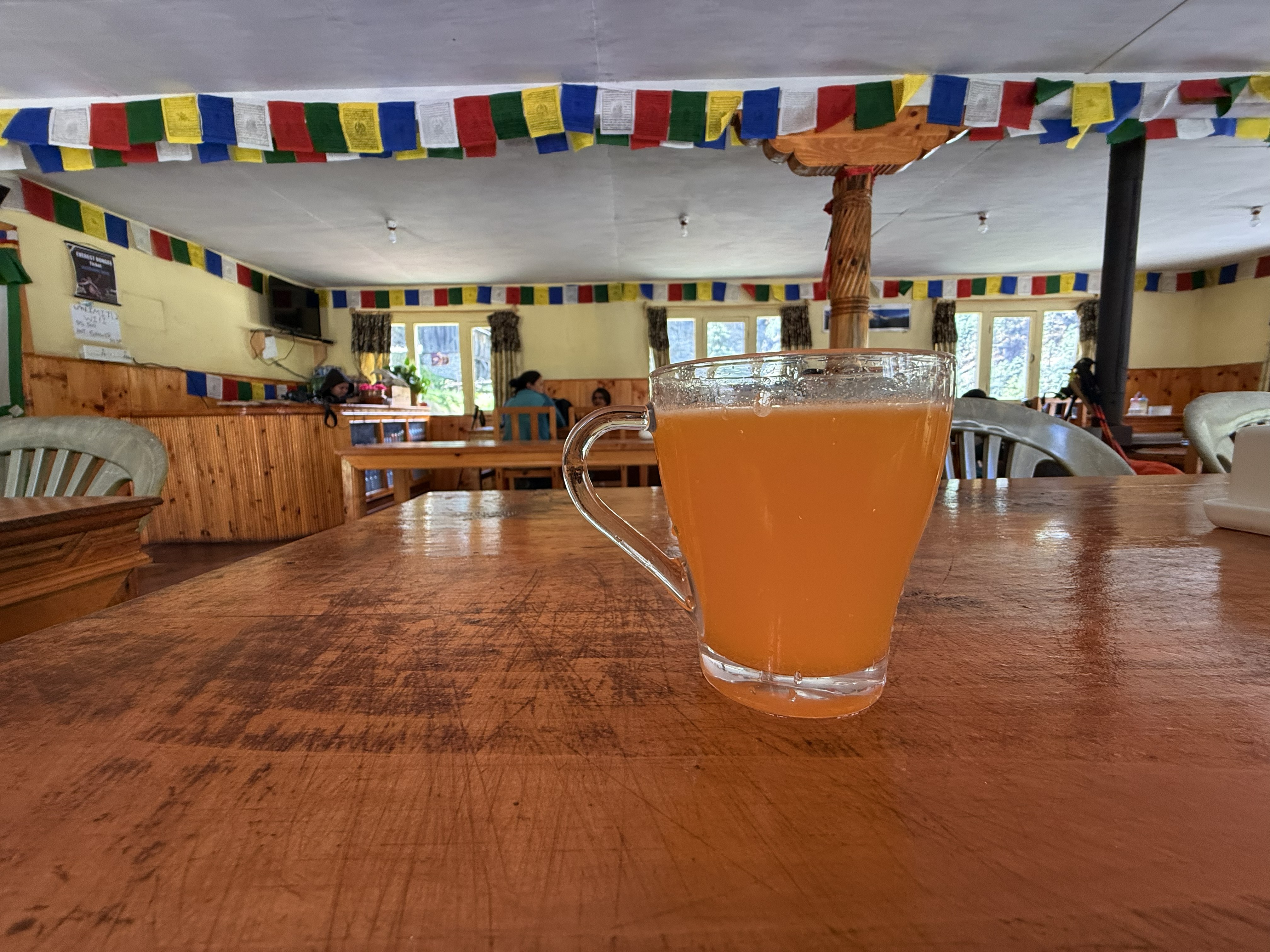
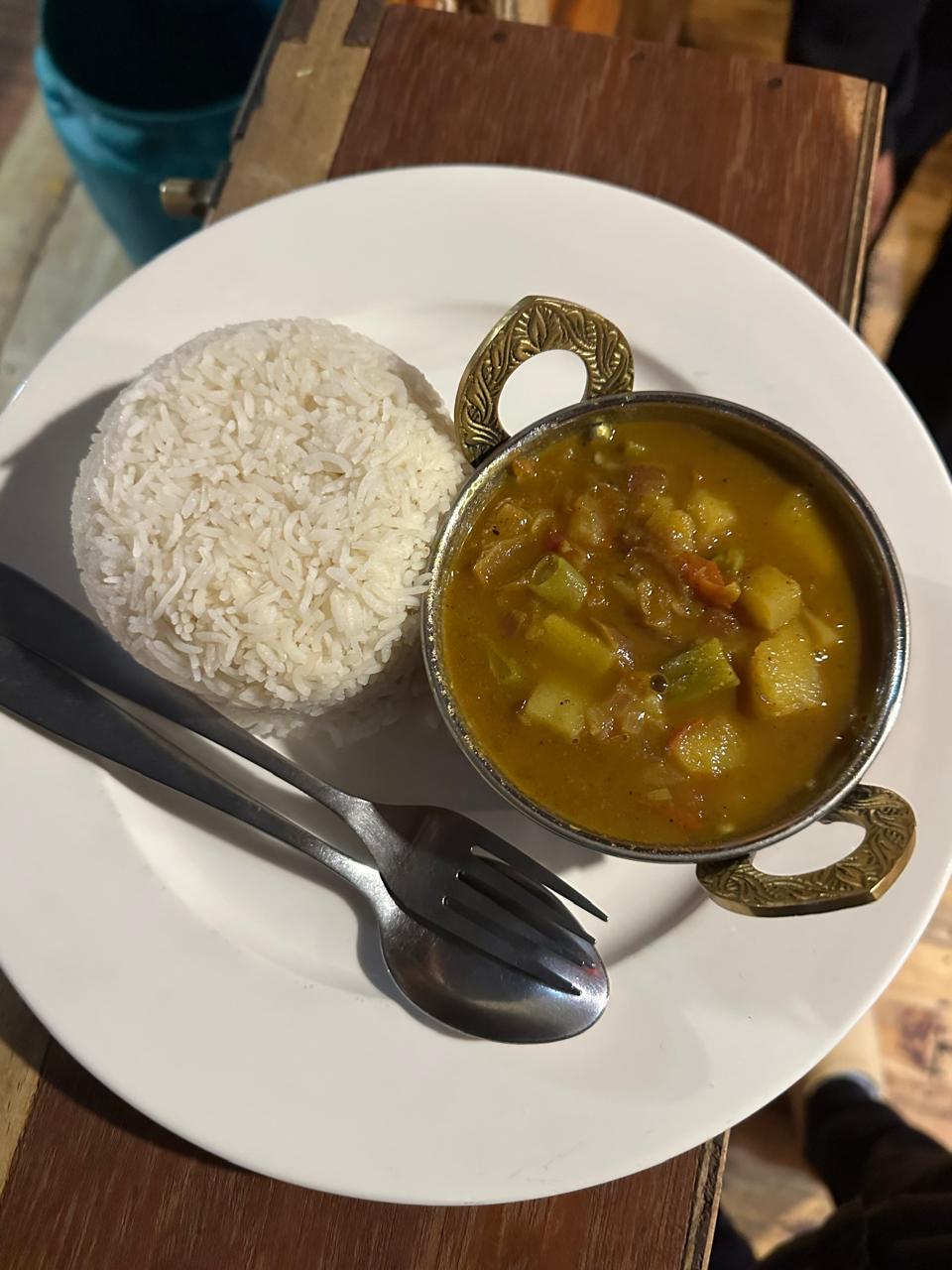
A staple Nepali dish consisting of boiled rice, lentil soup, and side dishes like vegetables and curry. It's a favorite among trekkers because it's filling, nutritious, and often comes with unlimited refills!
Sherpa Stew
A warm, hearty soup with vegetables, noodles, and sometimes meat, although we advise a vegetarian diet whilst on trek to avoid food poisoning which is very common to get from meat up in the mountains.
Veggie Momos
Our favourite - Nepali dumplings filled with vegetables, served steamed or fried.
Garlic Soup
Not only tasty but also believed to help with acclimatisation and prevent altitude sickness.
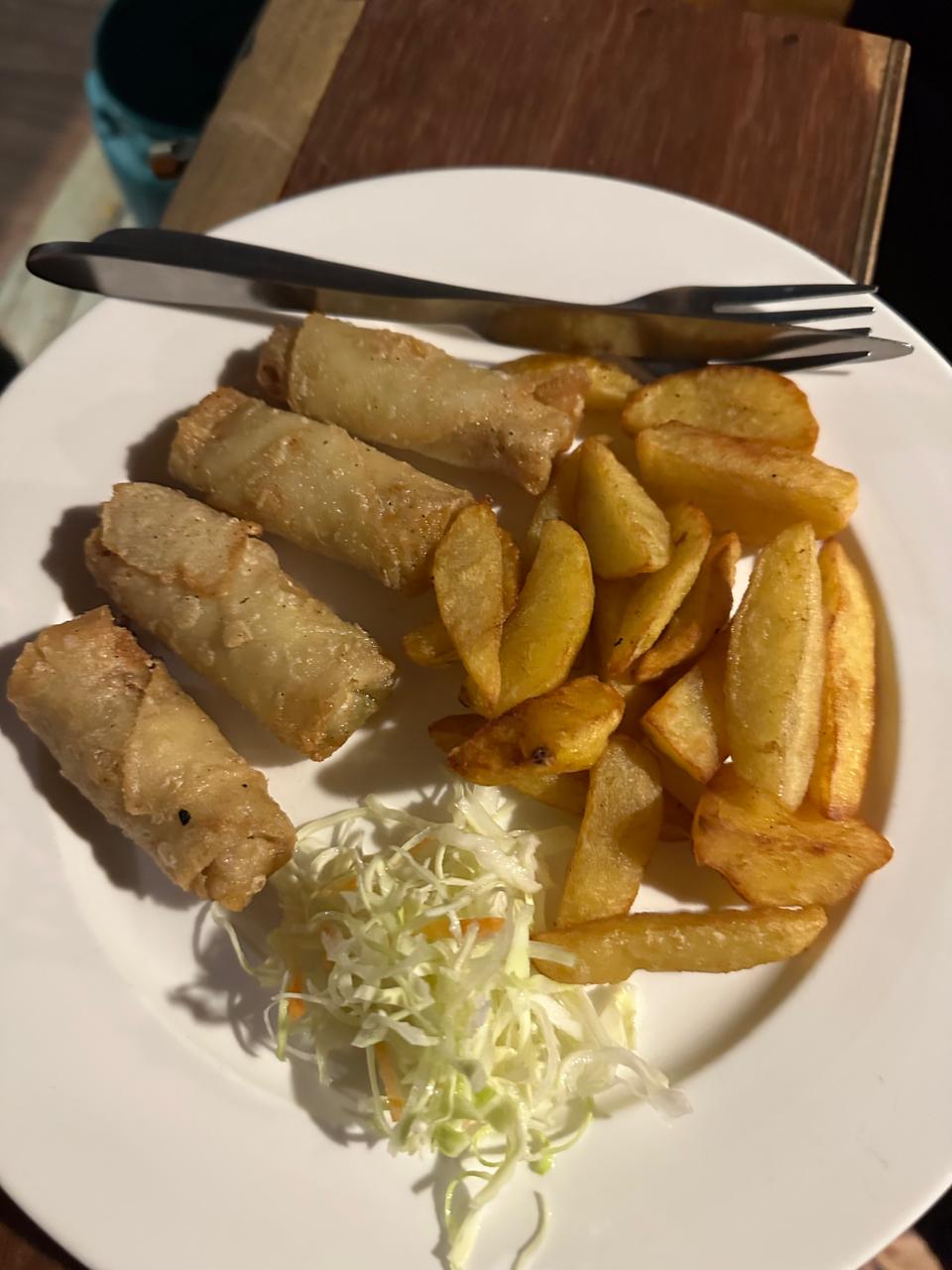
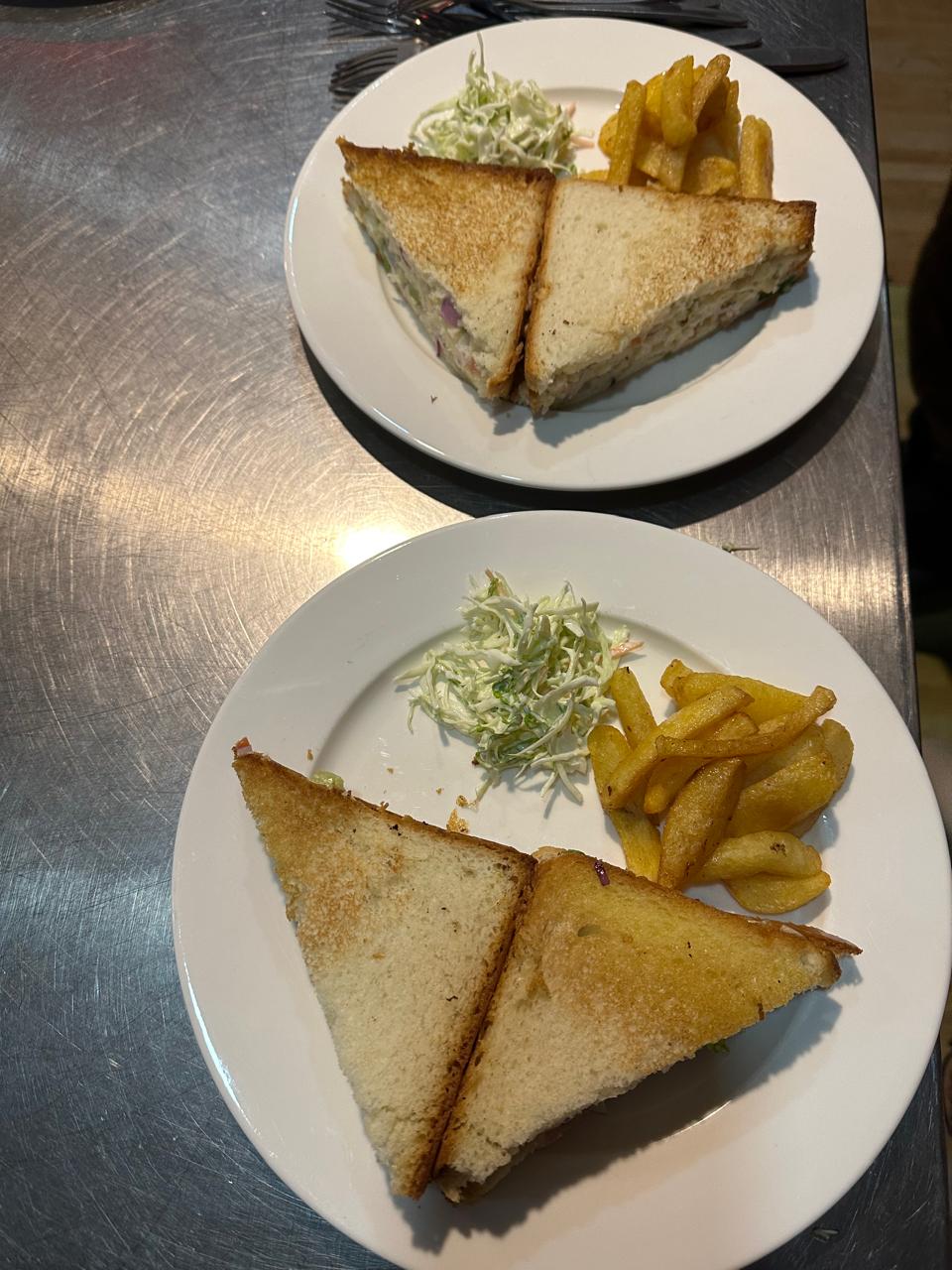
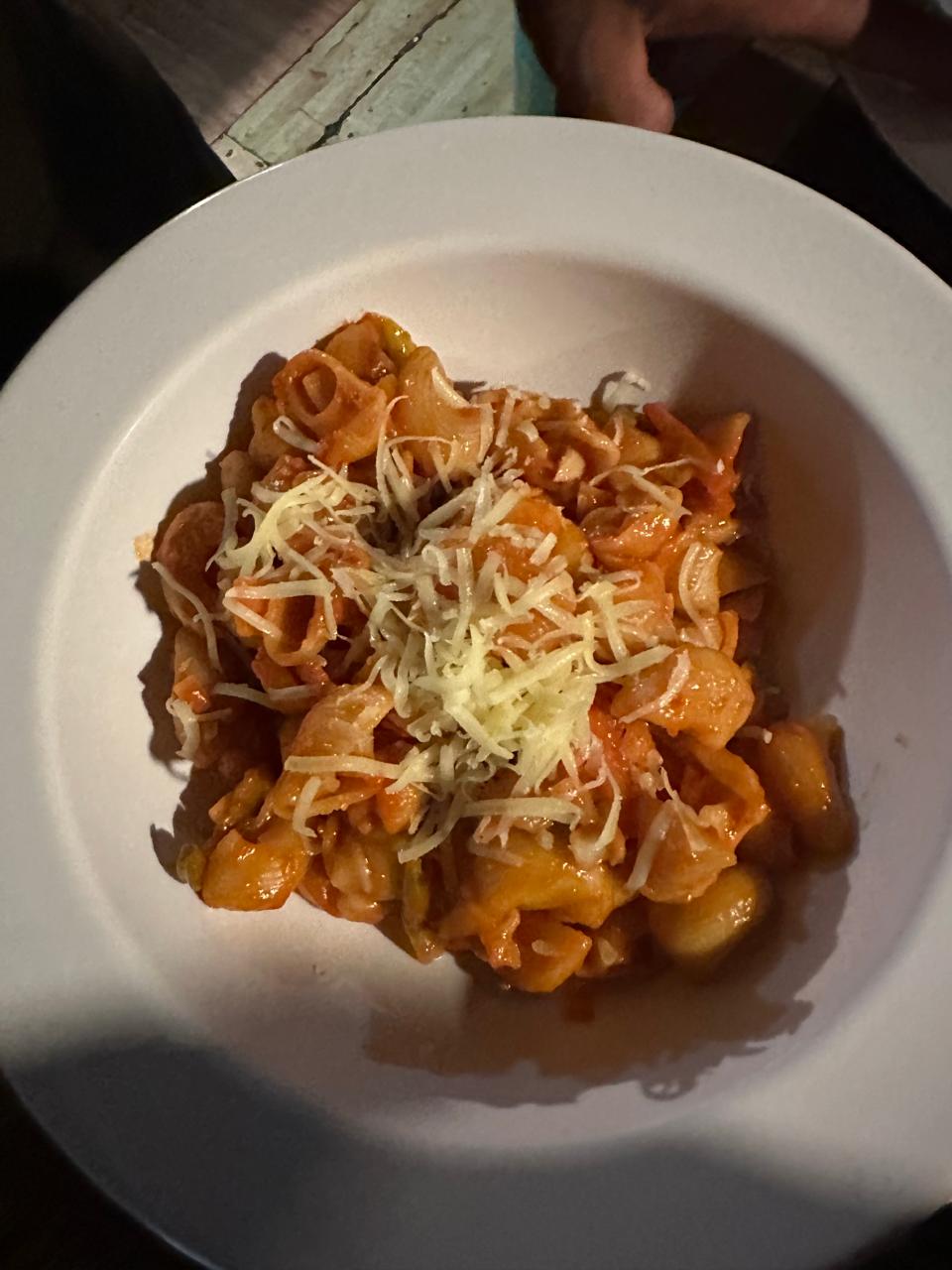
Yes, you can find these on the trail! They might not be gourmet, but they're comforting after a long day.
Sandwiches and Soups
Light and easy options for lunch.
Macaroni Dishes
A simple yet satisfying choice.
Chips and Fried Rice
Great for a quick carb boost.
Tibetan bread with jam, pancakes, porridge, eggs (boiled, fried, or scrambled), and hot drinks like tea or coffee.
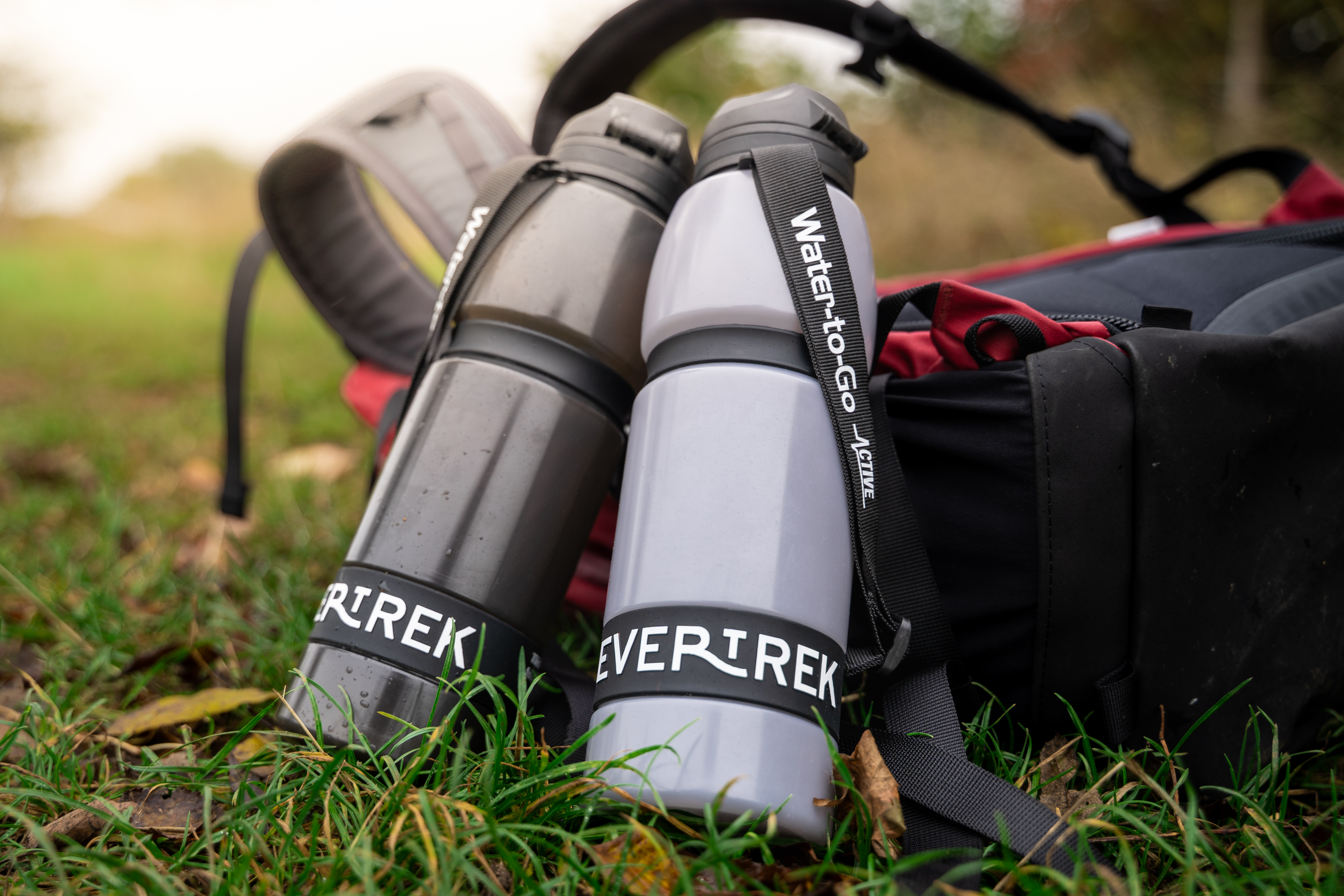
How We Make Water Safer For Our Trekkers
In March 2019, we became the first UK high-altitude trekking company to introduce purified water filters across all of our Nepal treks, reducing reliance on single-use plastic bottles and providing clean, great-tasting water without chemicals.
Previously, trekkers depended on bottled water or purification tablets - neither of which was sustainable or ideal. With each trekker potentially using over 50 plastic bottles per trip, the impact added up fast.
Making sure you're properly hydrated is an essential part of reducing the risk of altitude sickness. You need to drink more water at high altitude. Therefore, doing our part to reduce the environmental impact of our treks means that this small change has made a big difference for both our EverTrekkers and the communities who live on the trekking routes.
In areas with limited water sources, there will be opportunities to buy bottled water.
Environmental Impact
In our first season, this initiative prevented the use of around 16,500 one-litre plastic bottles in the Everest region - the equivalent height of five Ben Nevis mountains stacked!

Difficulty:
Moderate
How challenging is the trek?
The Annapurna Circuit is longer, higher, and more remote than the Annapurna Base Camp trek, making it a more physically demanding adventure. You'll reach a high point of 5,416m at the Thorong La Pass, crossing through an incredible variety of landscapes, from lush valleys to dramatic alpine terrain.
This is a true high-altitude trekking expedition. While it’s non-technical, it does require solid endurance and a good level of fitness.

PLUS Get a FREE training plan from The Altitude Centre
Book now and you can get a FREE consultation & training plan from The Altitude Centre!
If you’ve already completed the ABC trek, think of the Circuit as a next-level challenge, more altitude, more variety, and a deeper sense of journey.
Here’s what to consider in your prep:
Pre-Trek Fitness Prep
Before tackling the Circuit, you should be comfortable with:
- Trekking for 6 to 8 hours a day with a 6 to 10kg backpack
- Handling 800 to 1,000m of elevation gain in a single day, across multiple days
- Doing consecutive trekking days with little recovery time between
- Building cardio endurance, leg strength, and pack fitness through regular hikes and training
Not quite there yet? That’s totally fine, with a bit of structured training, this trek is absolutely within reach. It’s not a race, and the itinerary is built to help you acclimatise and adjust as you go.
What to expect on the trek
Altitude Challenges
You’ll reach a maximum altitude of 5,416m at Thorong La Pass, one of the highest trekking passes in the world. The air is thin, and the climb up to the pass is steep, especially from High Camp. Acclimatisation days are built in, typically around Manang, which is key for adjusting to the elevation safely.
The altitude makes even moderate exertion feel tougher, so pacing is important.
Duration
The classic trek takes 20 days in total. Expect to walk 5 to 8 hours per day, with a couple of longer days near the pass.
You’ll pass through multiple climate zones, from lush forests and terraced fields to high alpine terrain and barren valleys.
Terrain
The trail is incredibly diverse, both in terms of scenery and terrain:
- Expect stone staircases, rocky paths, suspension bridges, and high mountain passes
- Some steep climbs and long descents, especially the 1,600m descent from Thorong La down to Muktinath
- Mostly well-marked, non-technical trails, but tough on the knees and lungs
Good footwear, strong legs, and decent trekking poles will be your best friends.
Weather
Due to the altitude range, weather varies wildly:
- Lower sections are warmer and more humid, especially near the start
- Higher up, it’s cold, with sub-zero nights at High Camp and around Thorong La
- Best trekking seasons are spring (Mar–May) and autumn (Sep–Nov) for clear skies and stable conditions
You’ll need to be ready for sun, wind, and snow, sometimes all in one day.
Essential Kit
Explore our essential kit picks so you're comfortable, safe, and ready for every step. Download the full checklist to nail your packing.

Waterproof jacket
A versatile gore-tex or similar material jacket is ideal for year round walking, hiking and trekking in the roughest weather. Jackets like the Latok Mountain GORE-TEX® Pro Jacket offer great weather protection and breathability when you need it.

FREE equipment hire!
All EverTrekkers receive FREE winter sleeping bags and a FREE £110 down jacket – just let us know when booking to reserve.
PLUS: Get a FREE 80 Ltr duffel bag, t-shirt, cap, and map when you arrive in Kathmandu!

Insulated jacket
A down or synthetic insulated jacket is a must for sub-zero conditions. Jackets like the Montane Anti-Freeze XT Down Hoodie use water-resistant down for an excellent warmth-to-weight ratio, with features like high collars and storm flaps to trap heat.

Sleeping bag
A warm and reliable down-filled sleeping bag is essential for multi-day trekking or backpacking adventures. The Rab Ascent 700 is a great example, made with recycled materials and designed for both regular camping and mountain use.

Base layer top
A warm and breathable long-sleeve base layer, combining materials like Merino wool and synthetic fibres, helps regulate body temperature in various outdoor conditions. The Helly Hansen Lifa Merino Midweight is one such example.

Trekking shorts
Lightweight and durable walking shorts are ideal for fast-paced mountain hikes. Shorts like Montane's Tenacity Lite use stretch fabrics to offer protection from wind and abrasion.
Trekking trousers
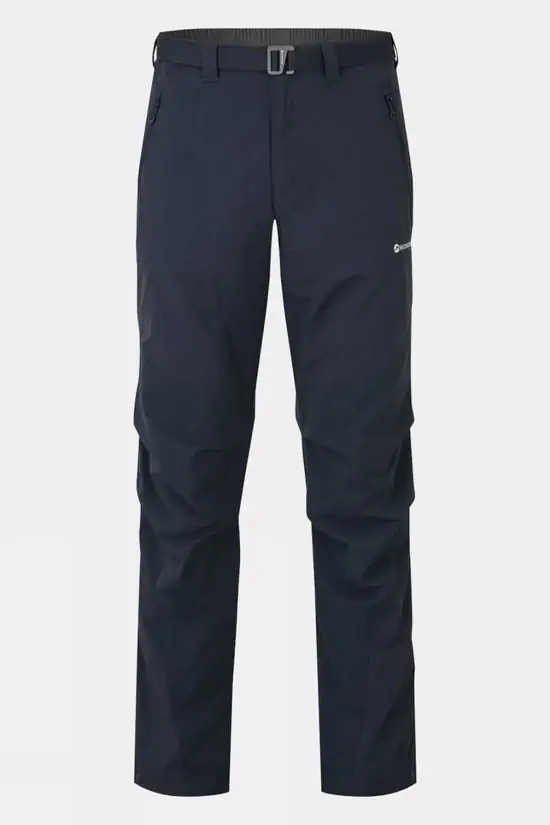
Tough, lightweight and versatile trousers are perfect for a range of outdoor activities. The Montane Terra Pants continue to be a go-to choice for everything from trekking to scrambling.
Trekking poles
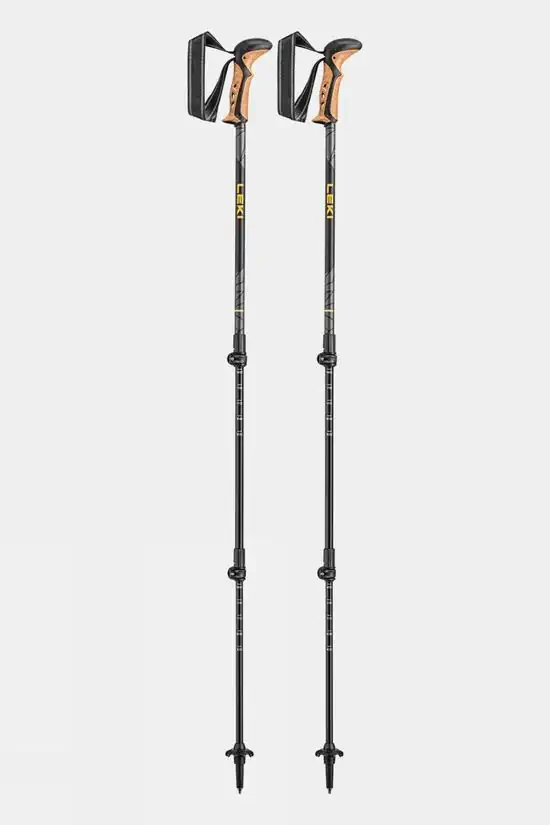
Lightweight yet sturdy walking poles help with balance and reduce strain on steep or uneven terrain. The Leki Khumbu Lite poles are a popular option for hill walking and mountain hiking.

Mountain sunglasses
Protective and high-performance sunglasses are important for alpine environments. Sunglasses like the Julbo Shield Reactiv combine style with serious high-mountain protection.

Leggings
Lightweight leggings with moisture-wicking fabrics are ideal for active use. The North Face Flex High Rise Leggings offer comfort and sweat management during exercise.
Technical T-shirt
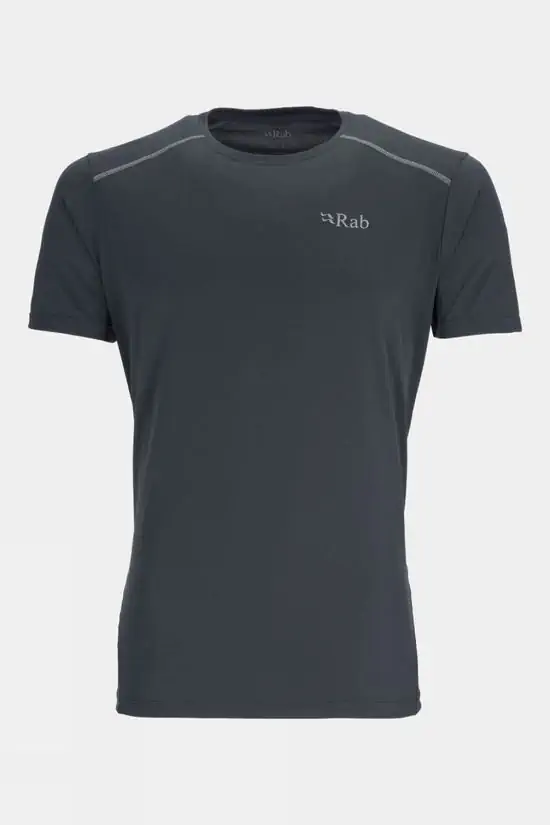
A moisture-wicking technical tee is essential for active days in the hills. The Rab Force T-Shirt is a reliable choice for mountain walkers and runners alike.
Hiking boots
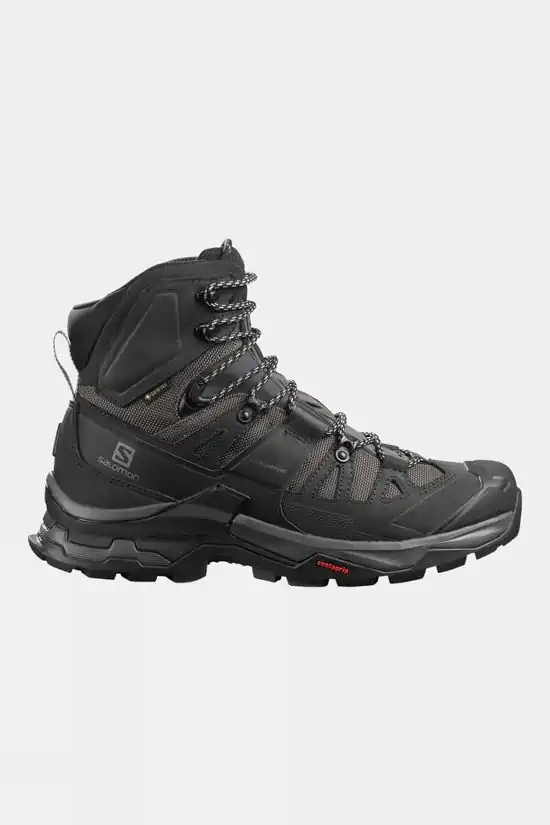
Supportive and grippy walking boots are key for long hikes and rugged trails. The Salomon Quest 4 GTX boots are built for demanding conditions and multi-day use.

Hiking socks
A good pair of merino-blend walking socks helps keep feet warm and comfortable on long walks. The Bridgedale Merino Hiker socks are a dependable option for various terrains.
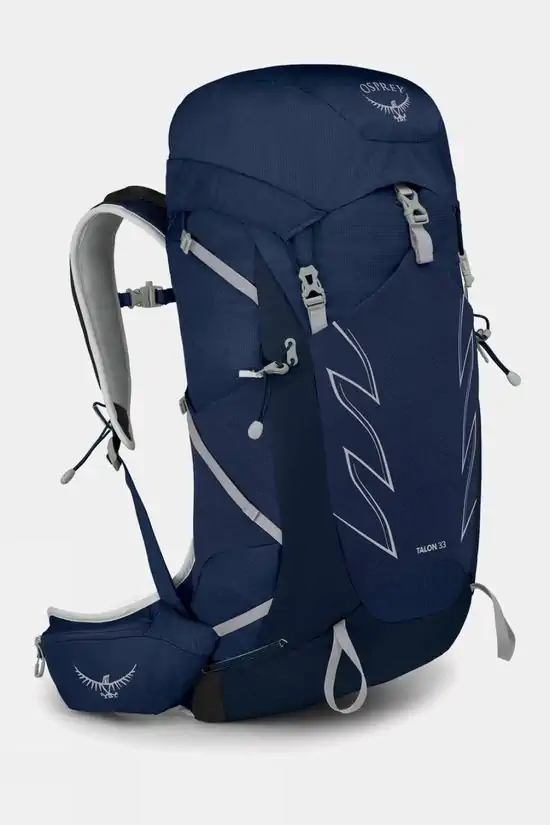
Daypack
A 30-35L daypack is a great size for longer hikes or overnight trips. Packs like the Osprey Talon 33 balance load well and offer good back ventilation.

Fleece mid layer
A soft, insulating fleece is great for layering on cooler days. The North Face Cornice II is a sustainable option made from recycled materials.

Warm beanie
A warm and comfortable beanie is ideal for cold weather walks or everyday use. The Mountain Equipment Humbolt Beanie fits the bill.

Hydration reservoir
A 2-3L hydration bladder helps you stay hydrated on the move. The Osprey Hydraulics 3L Reservoir is stable, easy to use, and reliable.

Water bottle
A durable, wide-mouth bottle is handy for refilling on the go. Nalgene's Sustain 1L Water Bottle is a classic, perfect for day hikes or longer trips.

Waterproof gloves
Warm, waterproof gloves are essential for wet and cold mountain days. Gloves like the Montane Respond Dry Line offer protection and dexterity in tough conditions.

Headtorch
A compact and bright headtorch is important for early starts or late finishes. The Petzl Tikka 350L is simple to use and effective for low-light navigation.
Explore our essential kit picks so you're comfortable, safe, and ready for every step. Download the full checklist to nail your packing.
Trip Extensions
Chitwan Trip Extension - Jungle Safari
Chitwan National Park is the perfect way to wind down and relax after your rugged trek to Everest Base Camp. Nestled in the southern lowlands of Nepal, this pristine national park offers a different kind of adventure - one that’s all about wildlife, nature, and tranquility. Here’s why you should consider this amazing extension.
Why Chitwan National Park?
- Rare Wildlife Sightings: Get ready for the awe-inspiring experience of seeing animals like Tigers, Rhinos, Crocodiles, and a variety of bird species in their natural habitat. Chitwan is a wildlife enthusiast’s dream come true!
- Comfortable Accommodation: After the rustic charm of teahouses on your Everest trek, you’ll enjoy the comfort of a lodge and hotel in Chitwan, where you can relax and rejuvenate.
- Jungle Safari: We’ve planned an awesome Jungle Safari that will take you deep into the heart of Chitwan’s wilderness, where you’ll have the chance to encounter incredible wildlife
- Local Guide: You won’t be exploring this wild terrain alone. We provide you with a knowledgeable jungle guide during the safari to enhance your experience and keep you safe.
Thinking this add-on might just be your next big Himalayan upgrade? We hope so!
Select your extension at checkout, or if you’ve already booked your trip just give us a call at 02920 003216, and we’ll take care of the rest.
FAQs
The Annapurna Circuit trek with EverTrek typically costs between £2,450 and £2,550, depending on the time of year and route variations. This includes all accommodation, meals during the trek, permits (including the Annapurna Conservation Area Permit and TIMS card), transport within Nepal, and full support from our experienced local guides and porters.
The Annapurna Circuit is a challenging high-altitude trek with multiple long days of hiking and significant elevation gain. You’ll be trekking for 5–8 hours per day, sometimes on steep, rocky, or uneven terrain, and crossing Thorong La Pass at 5,416m, the highest point on the route.
You don’t need to be an elite athlete, but a strong base level of fitness and good stamina are essential to cope with the demands of trekking at altitude over many consecutive days.
Training should focus on cardio endurance, leg strength, and long hikes carrying a pack. Hill walking, stair climbing, cycling, and gym sessions are all great ways to prepare. Try to replicate trek conditions by doing back-to-back long hikes and getting used to walking with weight on your back.
Aim to train 4–5 times per week for a few months before your trip. Consistency is key to building the fitness and resilience needed for long days on the trail.
You can also join one of our UK training weekends (such as in Snowdonia or the Brecon Beacons) for a great opportunity to meet the team and build confidence on the hills.
While most expenses are covered in the trip cost, we recommend budgeting around £20–£45 per day for extras like snacks, hot drinks, Wi-Fi, showers, charging devices, and tipping. Carrying Nepalese Rupees in small denominations is helpful, especially in remote areas where card payments aren’t accepted.
Yes, hot showers are available at most teahouses along the Annapurna Circuit, especially in the lower-altitude villages. As you gain elevation, facilities become more basic, and hot water may be limited or require a small fee. Many trekkers use wet wipes or quick washes at higher altitudes where water is scarce.
The best times to trek the Annapurna Circuit are:
- Spring (March to May): Enjoy warmer temperatures, blooming rhododendrons, and good visibility.
- Autumn (September to November): Crisp air, stable weather, and some of the clearest mountain views of the year.
Avoid the monsoon season (June to August) when heavy rains and landslides can impact trail conditions.
Tipping is a great way to thank your trekking team for their hard work. A good guideline is to budget around 10% of your total trip cost. For a £2,450–£2,550 trek, a tip of approximately £245–£255 is appropriate. This will be shared among the guides and porters, and your guide will advise on how to distribute it fairly at the end of the trek.
The Annapurna Circuit reaches altitudes above 5,000m, so altitude sickness is a real consideration. Here’s how to reduce your risk:
- Follow the gradual ascent itinerary with acclimatisation days.
- Stay well hydrated, aim for 3–4 litres of water daily.
- Avoid alcohol and smoking.
- Know the symptoms: headache, nausea, dizziness, fatigue.
- Take Diamox (acetazolamide) if advised by your GP.
- Communicate openly with your guide, early action is key, and safety always comes first.
Yes, your main duffel bag should not exceed 15kg, as this is the maximum weight we allow per bag to protect the health and wellbeing of our porters. You’ll also carry your own daypack with essentials like water, snacks, extra layers, and sun protection.
Pack smart and keep things lightweight. Many trekkers pick up snacks and last-minute essentials in Pokhara or Kathmandu before starting the trek.